




<img height="1" width="1" style="display:none" src="https://www.facebook.com/tr?id=301879849994395&amp;ev=PageView&amp;noscript=1">

Blog

See the latest news, innovation updates, trial results, grower stories and more from Agricen. 
March 16, 2020 — Posted By Agricen

Gregg S - Nutrien

Nutrien Ag Solutions’ Gregg Schmitz has witnessed transformational changes in agriculture–from the birth of modern crop protection to the growth of today's market for ag biostimulants and biologicals, even leading some of the early, pivotal field trials that brought Accomplish technology to Nutrien's row crop customers.

We recently spoke with Gregg about his take on this biocatalyst technology, and why growers who aren't already using Accomplish LM, Titan XC or Extract will want to consider adopting this biochemistry in their fields in 2020.

With a father who was part owner of an agriculture retail facility in Iowa, Gregg grew up in the ag business, working in both retail and wholesale during high school and joining the sales team when he graduated. In 1985, the business was acquired by United Agri Products—which ultimately evolved into Nutrien Ag Solutions. Currently, Gregg serves as Nutrien Ag Solutions' Marketing Manager for the Western Iowa, Eastern Nebraska, South Dakota Division.

Gregg is a sound agronomist who firmly believes in soil health. His 2007-2008 replicated trial results on Accomplish were the springboard for incorporating this technology into Nutrien’s core fertilizer and plant nutrition business.

In the summer of 2007, I got a call to evaluate a product called Accomplish LM that was then being used in California and other states, mainly on specialty or high value crops," says Gregg. "We decided to spray some strips in the fall of 2007 at a corn test plot we had north of Wall Lake, Iowa. To be honest, I was initially skeptical."

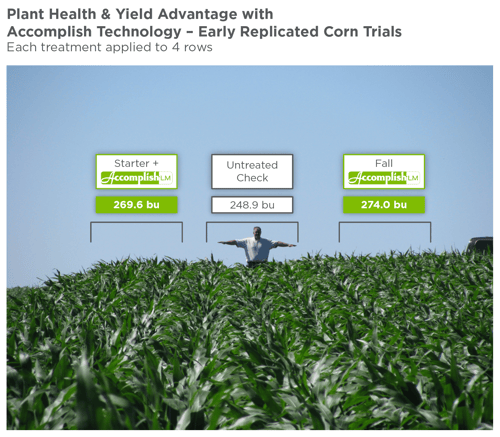
"In the summer of 2008, we started to see some visual differences at the V5-V6 stage of growth," he says. "In the area where we applied Accomplish, the corn leaf color was greener. Below ground, we saw more root mass with the Accomplish treatment. We had roots that extended at least three feet into the soil along with a more fibrous root system. We took these trials to yield and had good ROI on all of the applications we made."
AccomplishLM_Corn 01

Gregg and his team had also sprayed a few strips on soybeans in the fall of 2007, using the Accomplish that was left over after spraying the corn test strips. He saw benefits with that crop, too, including seeing the soybeans retain their leaves longer prior to harvest.

"Going into the fall of 2008, we set up trials with key customers at each of our divisions to replicate our results on a larger, real-world scale," he says.

Based on observations from his initial Accomplish LM trial work (harvested in 2008) and from subsequent trials testing the technology with customers at different locations over a two-year period, Gregg's skepticism changed into a belief that Accomplish technology could enhance his grower customers' operations. Some of his observations from that period included:

  • More mellow, less compacted soils and less residue where Accomplish was applied, allowing for smoother tilling operation
  • A customer with tight clay and high pH soils reporting a much more even appearance to his corn field with Accomplish than he had ever seen in past crops–the difference in emergence was right to the line where the trial was applied
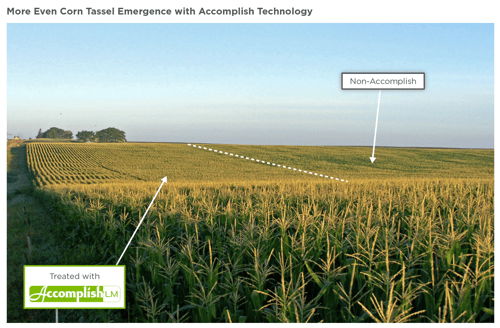
  • A big visual difference in terms of more even color, plant development and tassel emergence–along with a 10+ bu/a yield response–in a large-scale trial testing Accomplish technology with UAN in a corn-on-corn field that had liquid hog manure applied the previous fall
  • Carryover effects on crop growth and yield into a second growing season–without additional Accomplish application
AccomplishLM_Corn 02
In an early trial testing Accomplish technology, more even corn tassel emergence
was seen where Accomplish was applied.

Today, Gregg uses a systems or solutions approach to help his customers maximize their ROI on every field, an approach that typically includes 1 gallon per acre of Extract (which contains Accomplish technology) each year. Since 2010, he has also used Titan XC on the majority of dry P&K applications. We asked him why he believes biochemistry is so important to soil health and sustainable crop production.

"There is a quote from Dick Goff, who was an agronomist from Midwest Laboratories in the 1980s. He always said, 'We cannot expect a plant’s productivity to be greater than the foundation and health of the soil.' This quote always stuck with me, as it is about balancing everything we do," says Gregg.

In my mind, biochemistry is the catalyst to delivering the balance we need to help our customers preserve their ability to maximize productivity and ROI on every acre they farm," he says. "With the Accomplish products, we see many of those benefits, like the development of the roots and the mellowness of the soil, both in the current crop year and even beyond."

With plenty of growers who haven’t yet tried or adopted biological or biostimulant technologies, Gregg encourages them to explore the benefits of biochemistry for improving soil health and crop performance.

There are over a decade's worth of trials showing how Accomplish biochemistry can benefit our growers," Gregg says. "Doing some hands-on research, even if it's outside of the normal row crop production, can be a good way to build confidence. One way I looked at the technology early on was by using it in my own garden and on my lawn."

"Make sure you dig plants and get your hands dirty," he adds. "It all starts in the roots and the soil.”

Find out why the biocatalyst technology Accomplish LM, Titan and Extract makes a good addition to agronomic programs by accessing the biocatalyst technology booklet.

Download the Booklet


Read More
February 19, 2020 — Posted By Agricen

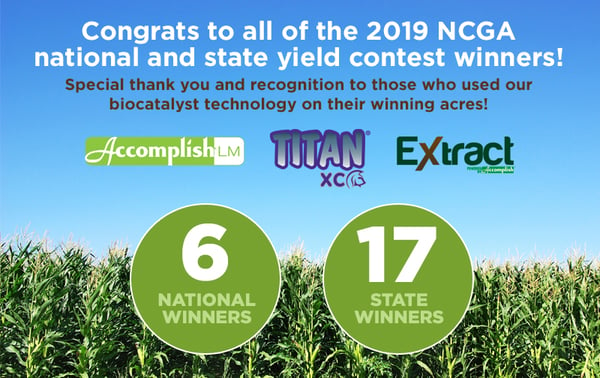
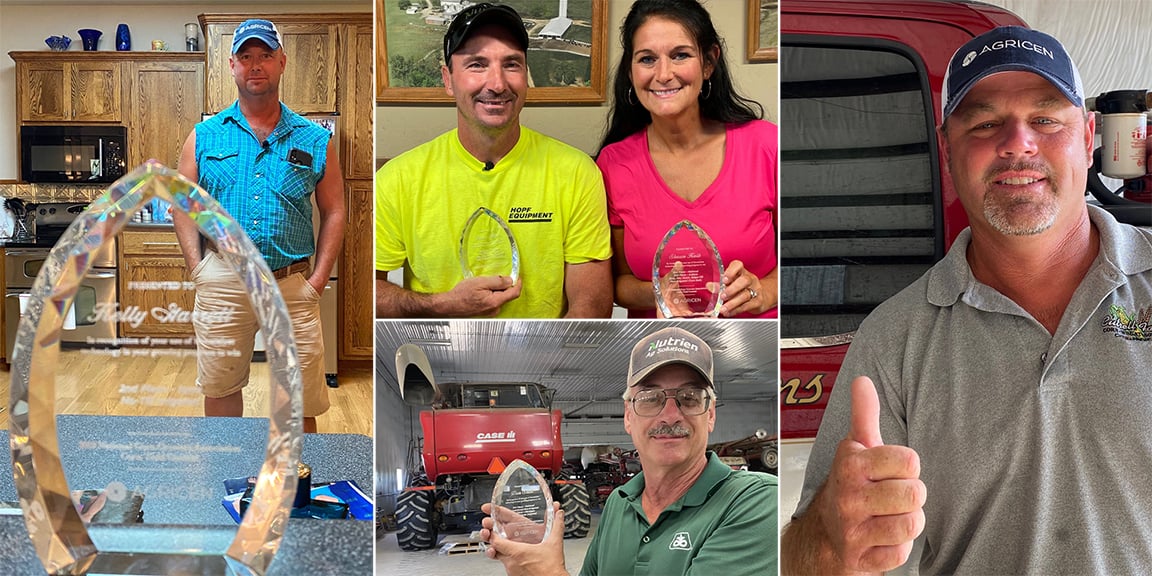
Every year, growers across the country compete in the National Corn Growers Association (NCGA) Corn Yield Contest and attempt to push their corn yields as far as they can go. We want to congratulate all of the 2019 winners, with special recognition to the 6 national and 17 state winners who used Accomplish LM, Extract PBA or Titan XC technology on their winning acres!

08-20-NCGA-winners

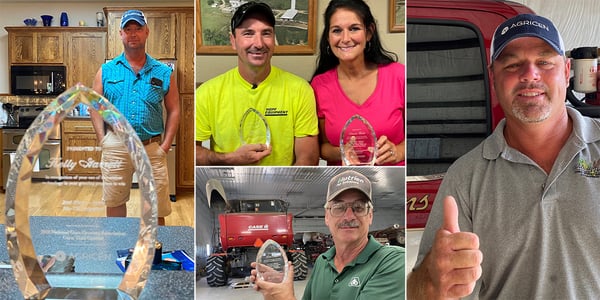
Among the 2019 winners who used our technology are Health Cutrell, Kevin and Shawn Kalb, Don Stall, Kelly, Cael and Colin Garrett, the Hults family, and Tommy and Valerie Cartrite–many of whom we've profiled on our blog for their previous wins.

NCGA_2019_winners

Pictured: Kelly Garrett (left), Kevin and Shawn Kalb (top center), Don Stall (bottom center), Heath Cutrell (right).

Congratulations to the winners on your achievements, and we wish all growers success in the coming season!

Learn more about the biocatalyst technology that's helping top corn growers achieve big yields by downloading our FAQ.

Download the Biocatalyst Technology FAQ

Read More
September 26, 2019 — Posted By Agricen

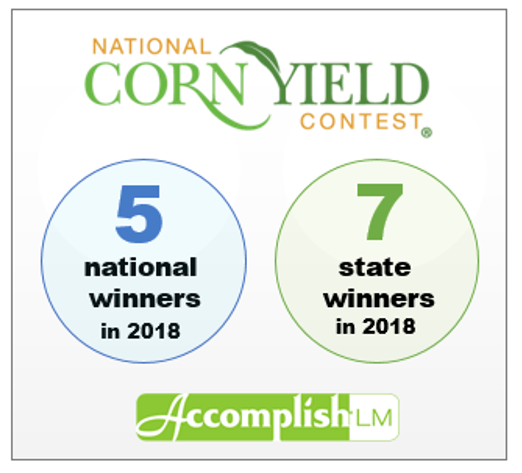
NCGA 2018 accomplish technologiesIn 2018, no fewer than five national winners and seven state winners of the NCGA's National Corn Yield Contest used Agricen's biocatalyst technology on their winning acres. We are fortunate to be represented in the best practices of many leading growers, and humbled by the opportunity to help transform grower productivity.

Before the start of this year's harvest, we had the opportunity to meet up with some of the 2018 NCGA winners to celebrate their success last season. Here are some of the folks we are honored to say have used Accomplish LM, Titan XC or Extract PBA as part of their winning strategy. 

2018 National Winners

  • Don Stall, 1st place, Irrigated Corn Category (477.69 bu/a). Don Stall started farming at age 14, when he began cultivating 31 acres for a school project. Following graduation, he served for six years in the Marines, then operated a beef and cash crop operation. Don eventually moved to an all cash crop operation, and he currently farms 2,800 acres of corn, soybeans, and wheat in Charlotte, Michigan. In his "spare time," he serves his local community, both as the Township Supervisor (as he has done for the past 24 years!) and on the board of his county's fire department.

    Don Stall on farming 2Don has been entering the NCGA Corn Yield Contest since 2003, when he noticed that he was already achieving yields comparable to the growers who were winning the contest. He has been the Michigan high yield champion for nine years in a row. In both 2017 and 2018, Don won first place nationally in the irrigated corn category, and his winning yield of 477.69 bu/a in 2018 also placed him as the overall yield champion in the United States.

    Don credits a systems approach to his success. "There is no one answer to achieving high yields. It is a system approach, and you must understand your soils better than anyone else."

    Don also treats all of his dry fertilizer with Titan XC to help make the most of his applied nutrition, and he has also used other biocatalyst products in his program. As he says, "Biochemistry is intriguing and interesting. I believe these products are needed in today’s farming."

  • Kevin Kalb, 1st place, AA Non-Irrigated Corn (388.07 bu/a), Shawn Kalb, 1st place, AA No-Till/Strip-Till Non-Irrigated (343.0 bu/a) & Nikia Kalb, 3rd place, AA Non-Irrigated Corn (343.23 bu/a). The Kalbs and their four children (including third-place winner, Nikia) grow soybeans and corn in the small town of Dubois, Indiana. They also run a turkey operation, producing over 1.8 million tom turkeys in the last 12 years.

    kevin-shawn-kalb-ncga-2018Kevin and Shawn have been entering the NCGA Corn Yield Contest since 2007, winning 12 national titles in the non-irrigated division. Both Kevin and Shawn have had back-to-back, first-place national wins in their respective categories over the past two years (2017 and 2018).
    In 2018, Kevin achieved his personal best yield in the contest, achieving 388.07 bu/a in the AA Non-Irrigated Corn category.

    The Kalb family can also be seen on the farm reality television show, Corn Warriors.

  • Tommy & Valerie Cartrite, 3rd place, Irrigated Corn (350.63 bu/a). Hailing from Sunray, Texas, Tommy and Valerie also won first place in their state competition.

2018 State Winners

  • Stuart Askew, 1st place, A No-Till/Strip-Till Non-Irrigated, North Carolina (274.58 bu/a) 
  • Connor & Kelly Garrett, 1st place, No-Till / Strip-Till Irrigated, Iowa (326.05 bu/a)
  • Tommy & Valerie Cartrite, 1st place, Irrigated, Texas (350.63 bu/a)
  • David Hults, 2nd place, No-Till/Strip-Till Irrigated, Idaho (299.27 bu/a) 
  • Leslie Lindner, 2nd place, AA Non-Irrigated, Missouri (299.99 bu/a)
  • Chris Lindner, 3rd place, AA Non-Irrigated, Missouri (294.35 bu/a)
  • David Kolb, 3rd place, Irrigated, Minnesota (259.89 bu/a)

It's starting to matter not just what producers grow, but also how they grow it. Biocatalyst technologies play a role by making fertilizer applications more efficient and more cost effective, while also helping growers achieve their best yields. 

As this season's harvest comes in, we wish the best of luck to all of the growers who are competing in the 2019 corn yield contest.

(UPDATE: Learn about some of the 2019 corn yield contest winners who used biocatalyst technology.)

Learn more about biocatalyst technologies by downloading the Biocatalyst Technology FAQ.

Download the Biocatalyst Technology FAQ

Read More
September 4, 2019 — Posted By Agricen

titan-fall-fertilizerWhen it comes to fall dry fertilizer applications, poor soil conditions and bad weather can significantly decrease fertilizer efficiency. Treating dry fertilizer with Titan XC before it goes out in the field can help  growers address these challenges and get the highest return on their fertilizer investment.
How Titan XC Helps Maximize Grower ROI

The concentrated biochemistry in Titan XC makes nutrients in treated phosphorus and potassium-based fertilizers available to the crop more quickly. This creates greater fertilizer efficiency in the first season after application and ensures that the crop has the necessary nutrition when it needs it most.

Titan XC also helps hold the applied nutrients in a plant-available form, protecting them from tie-up in adverse soil conditions, such as high pH or poor soil composition. As an additional benefit, Titan XC has been shown to promote greater root system development, which gives the crop better access water and nutrients. This can lead to increased nutrient uptake and better yield performance.

Recent Trials Demonstrate Increased Fertilizer Efficiency

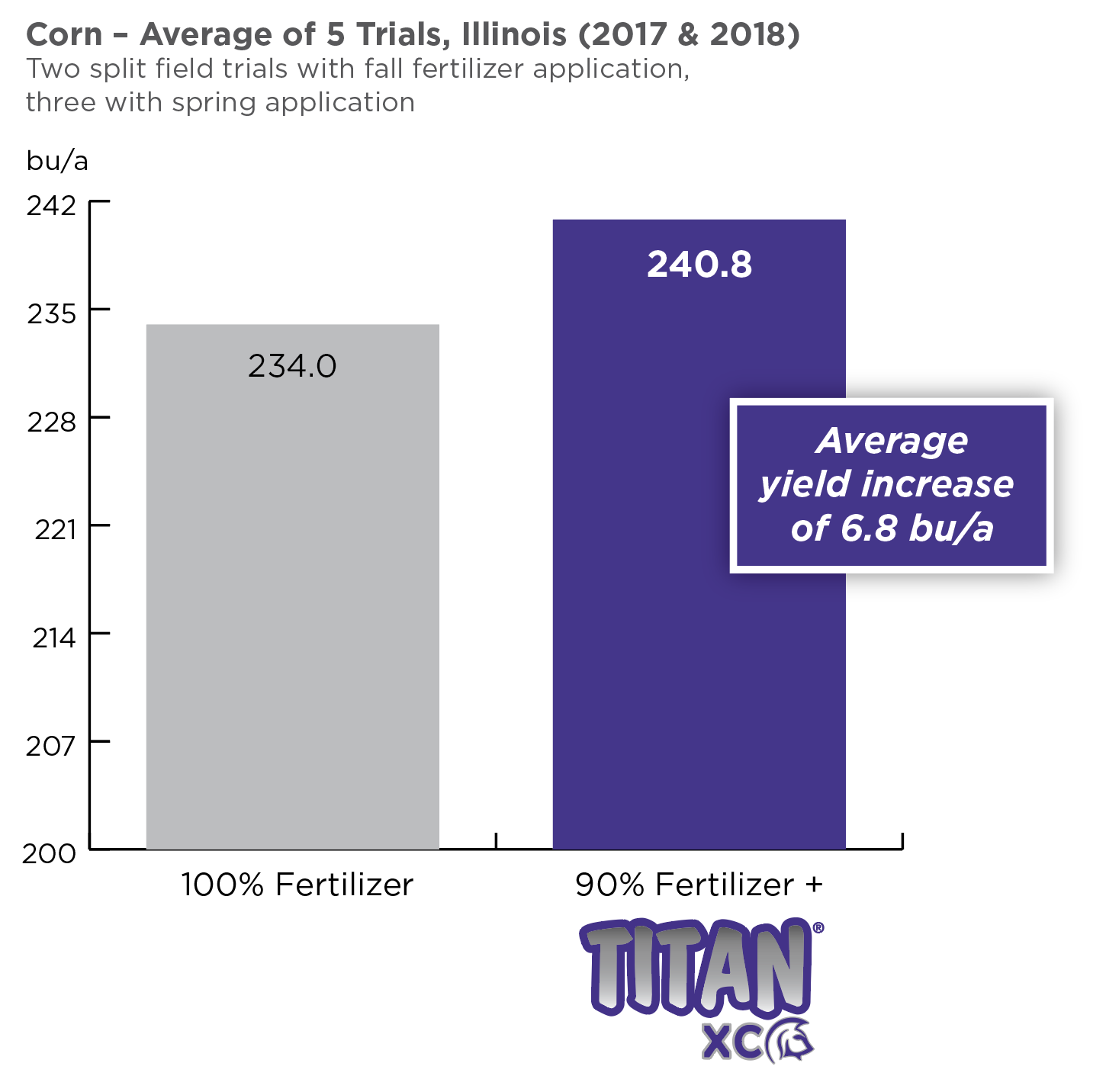
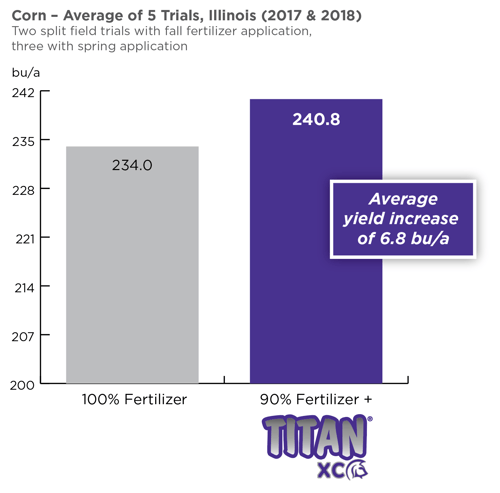
In five recent Midwest corn trials evaluating Titan XC with a fall or spring fertilizer application, treating dry fertilizer with Titan XC led to an average yield increase of 6.8 bu/a compared to untreated fertilizer. This yield increase was achieved despite reducing the treated fertilizer rate by 10% compared to untreated fertilizer.
Titan IL CornGetting the Most Out of a Crucial Investment

Adding the Titan XC biocatalyst to dry fertilizer is a great way to get the most out of a crucial investment this fall. With Titan XC, growers can expect to get more efficiency out of their fall-applied phosphorus and potassium fertilizer through increased nutrient availability and enhanced root development, setting the crop up for improved performance in the coming season.

Download the Titan XC corn bulletin to learn more about how Titan XC performs in fall and spring fertilizer programs. 

Download the Bulletin


Read More
July 24, 2019 — Posted By Agricen

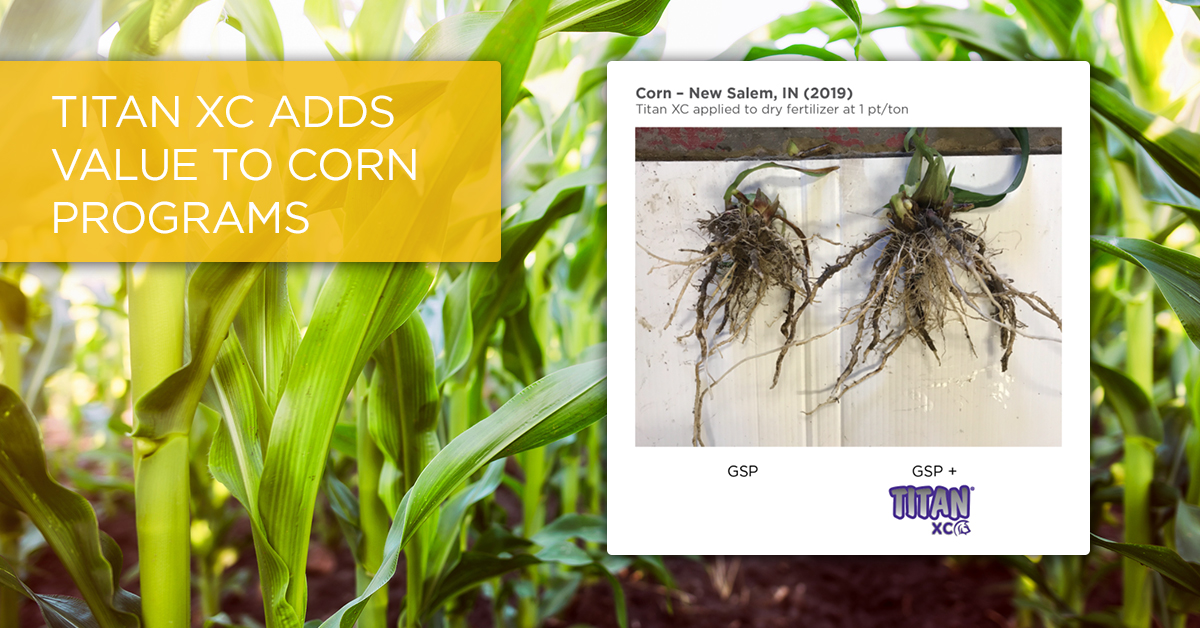
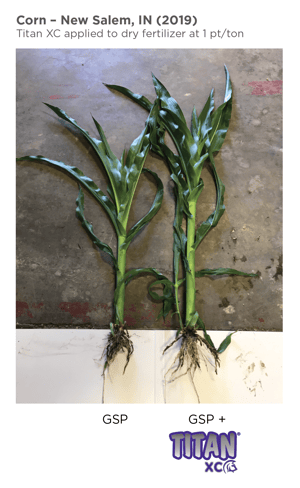
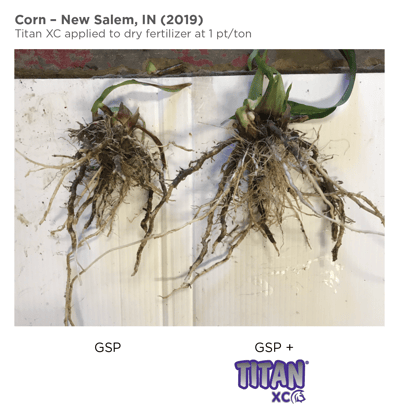
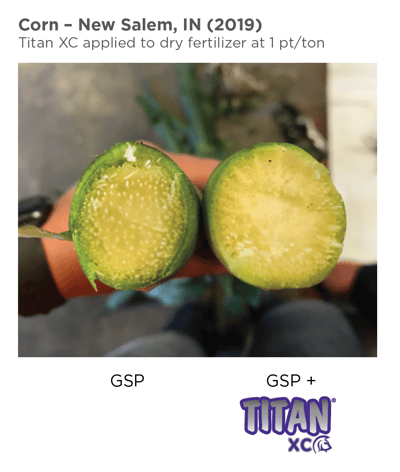
A check-in on a corn trial near New Salem, Indiana, shows that Titan XC is adding value to the grower's standard corn program, resulting in bigger roots, plants and stalks where Titan XC-treated fertilizer was used.

corn-new salem 01

Download the Titan XC Booklet

When we compared the plants we pulled, we consistently saw larger root masses, thicker stalks and larger plants on the treated side of the field compared to the untreated side," said Nutrien Ag Solutions' Sierra Gearhart, who is operating the trial.

In this trial, Titan XC was applied at 1 pint/ton to the grower's standard dry fertilizer, which was spread in the spring. In addition to using Titan XC to improve nutrient availability from the dry fertilizer, the trial also included a Nitrain, a nitrogen stabilizer, on the urea and ESN.corn-new salem 02corn-new salem 03

We look forward to seeing the results of this trial at harvest!

[UPDATE: Treating the grower's standard dry fertilizer with Titan XC led to a yield advantage of +17 bu/a (240 bu/acre with Titan XC vs. 223 bu/acre untreated) and a $57/acre net return to the grower.]
Learn more about using Titan XC on your acres by contacting your local Nutrien Ag Solutions location or downloading the Titan XC booklet to see how you can increase nutrient availability and improve plant performance.

Download the Titan XC Booklet


Read More
July 15, 2019 — Posted By Agricen

Whether growers spread dry fertilizer in the fall or spring, Titan XC can help ensure that more of their applied nutrients are used by the crop to maximize yield potential.

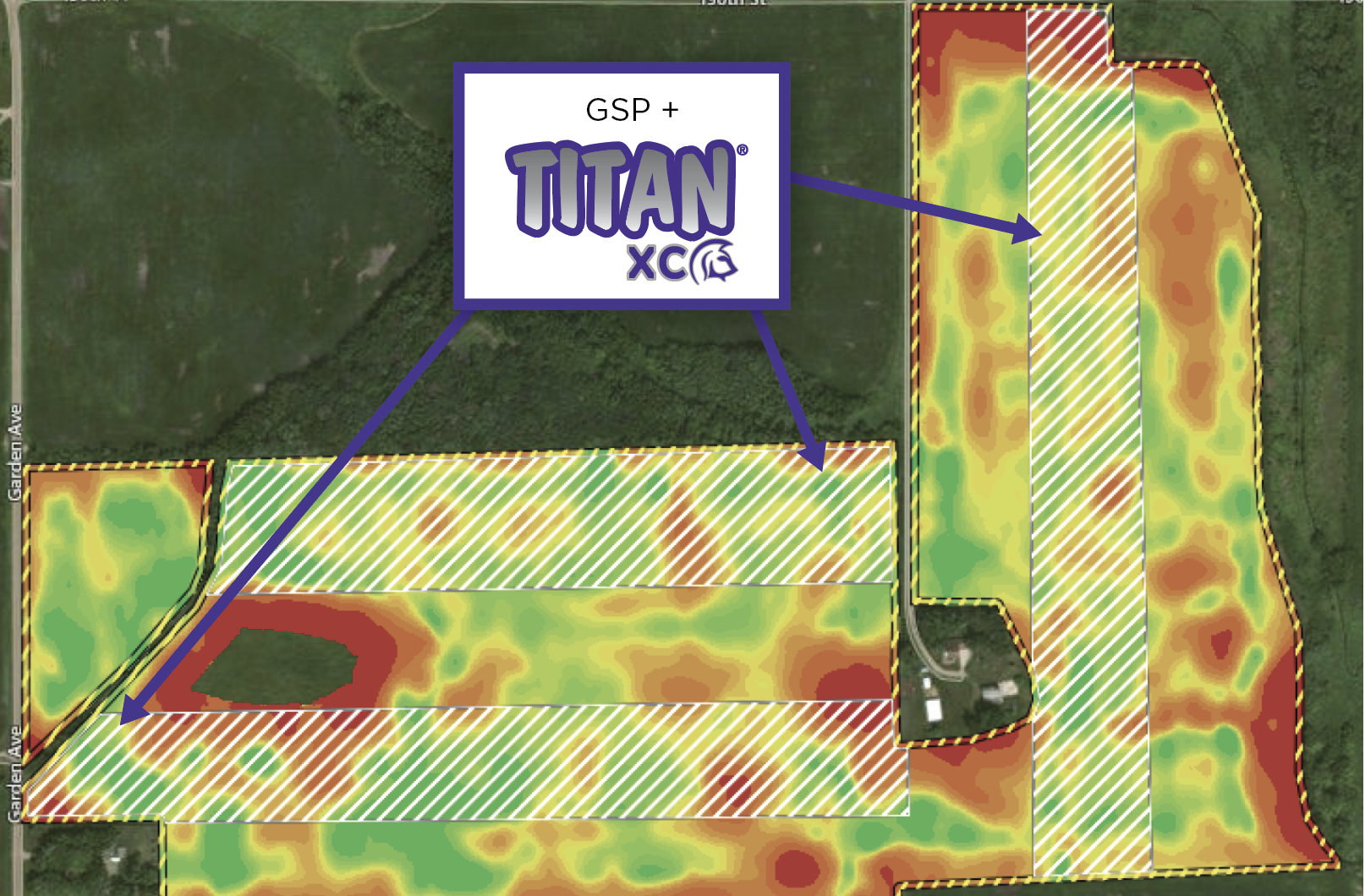
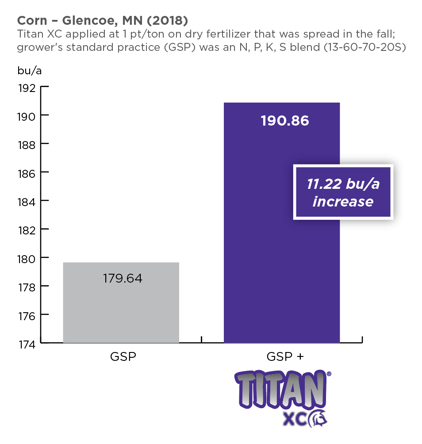
In this Minnesota field trial, treating the grower's fall-applied dry fertilizer blend (13-60-70-20S) with Titan XC at 1 pint/ton led to an 11.22 bushel/acre corn yield increase compared to no treatment.

Download the Titan XC Booklet

Titan XC Corn-Glencoe MNTtan yield map MN
Prior to harvest, tissue samples showed greater uptake of key nutrients by the plant when Titan XC was used.

"We saw a 17% increase in phosphorus and potassium and a 7-8.5% increase in sulfur, zinc and boron in the plant with Titan XC," noted Mike Amundson, location manager for the MN/SD Division of Nutrien Ag Solutions, which operated the trial. 

Learn more about Titan XC by downloading the Titan XC product booklet

Download the Titan XC Booklet


Read More
March 5, 2019 — Posted By Agricen

Biocatalyst FAQ BookletACCOMPLISH MAX, EXTRACT PBA and TITAN XC are biocatalyst technologies available from Loveland Products through Nutrien Ag Solutions.

Powered by naturally derived biochemical technology, these products are designed to increase nutrient availability from applied fertilizers, promote nutrient mineralization in the soil to increase existing nutrient availability, and support root growth through biochemical interactions with the plant and soil. ACCOMPLISH MAX also contains a kelp-derived technology that helps increase a plant's tolerance to abiotic stresses such as cool temperatures, fertilizer salts, dry conditions or heat.

Our booklet, "Biocatalyst Technology: Frequently Asked Questions," explains:

  • What ACCOMPLISH MAX, EXTRACT PBA and TITAN XC are

  • How the products work

  • When to use them

  • How biocatalyst technology can increase nutrient use efficiency and help growers get more out of their fertilizer investment

Learn more about these products for agriculture by downloading the booklet.


Read More
November 13, 2018 — Posted By Agricen

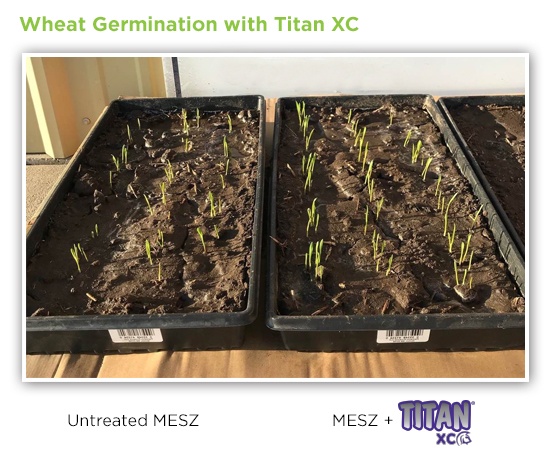
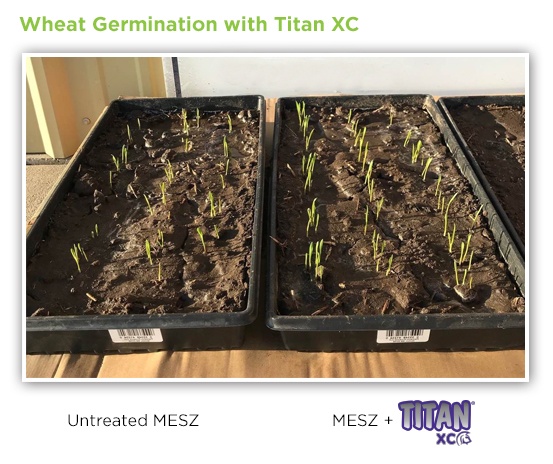
Using TITAN XC to improve nutrient release from dry fertilizer can make a big difference when it comes to wheat germination.

In this demonstration, seventeen MESZ fertilizer prills were mixed into field soil in each tray. Prior to mixing in the fertilizer, TITAN XC was sprayed on prills in the treated tray. As you can see, wheat germination is significantly advanced in the tray on the right that received the TITAN XC treatment. 

wheat-germination-titan-xc

You can also see a similar demo in this 10-day timelapse video, which shows a significant improvement in both wheat and corn germination with TITAN XC.

Available from Loveland Products through Nutrien Ag Solutions retail locations, TITAN XC is powered by concentrated, naturally derived biochemistry that is created by Agricen through a proprietary fermentation process. With TITAN XC technology on their dry fertilizers, growers can better ensure that their crop will make the best use of their P and K fertilizer investment.

Learn more about TITAN XC by downloading the TITAN XC product booklet


Read More
October 10, 2018 — Posted By Agricen

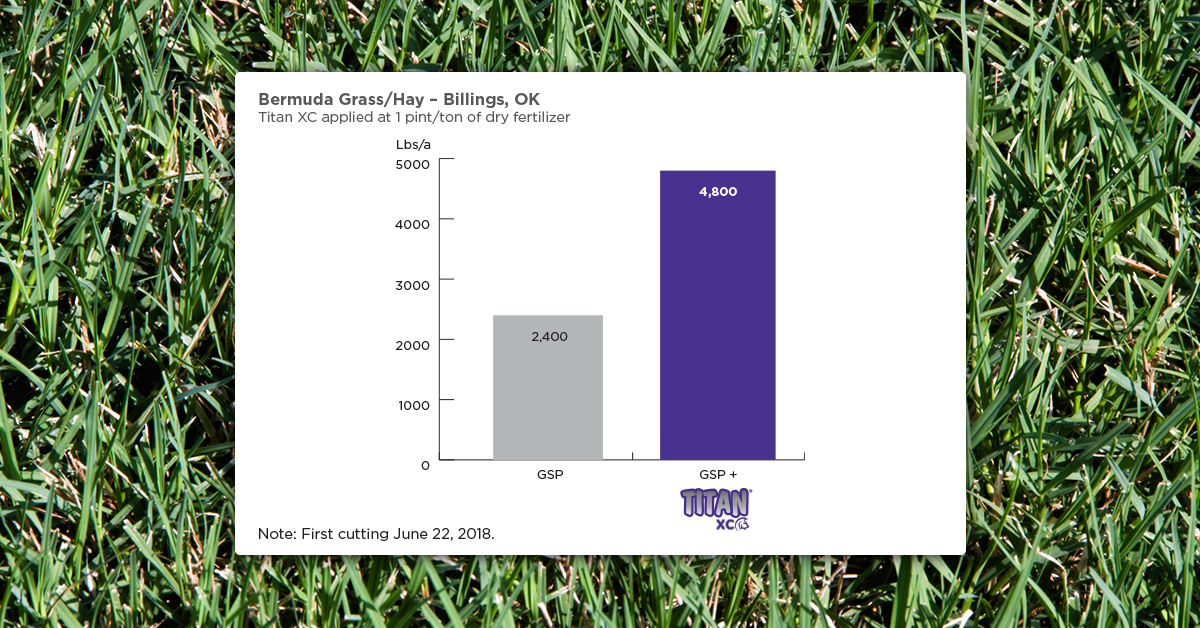
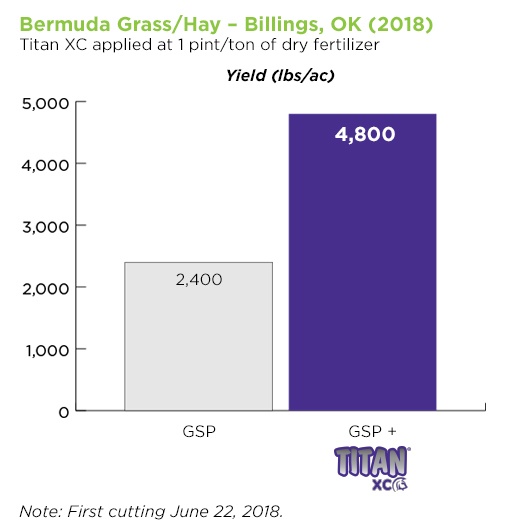
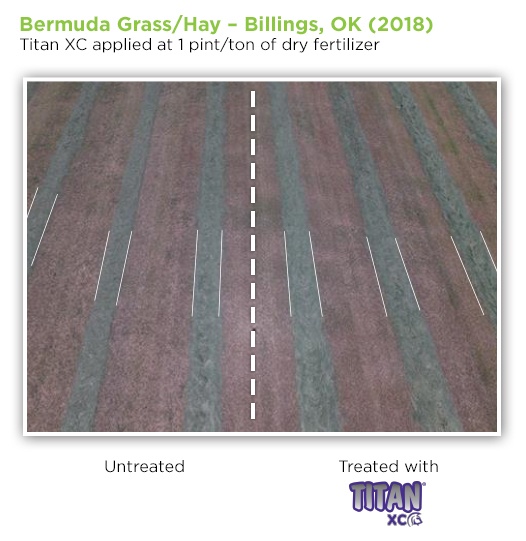
A field trial in Bermuda grass showed impressive results when Titan XC was added to the grower's standard fertilizer program. At the first cutting, the grower's hay yield was twice as high where Titan XC-treated fertilizer had been used (4,800 lbs/acre) compared to where the untreated fertilizer was used (2,400 lbs/acre).

bermuda-grass-OK-3

For the trial, Titan XC was applied at 1 pint/ton to the grower's dry fertilizer blend, consisting of N-P-K with sulfur. Treated and untreated fertilizer was applied to the field, which was located near Billings, Oklahoma, on April 17, 2018 (64 acres treated and 52 acres untreated). The first cutting was taken on June 22, 2018. Yield numbers were determined by weighing bales from five windrows each in the treated and untreated areas.

bermuda-grass-OK-2

Titan XC can be applied in spring or fall to help maximize nutrient release from dry fertilizers.

Learn how Titan XC can add value to your farming program by downloading the Titan XC booklet

Download the Titan XC Booklet

Read More
August 7, 2018 — Posted By Agricen

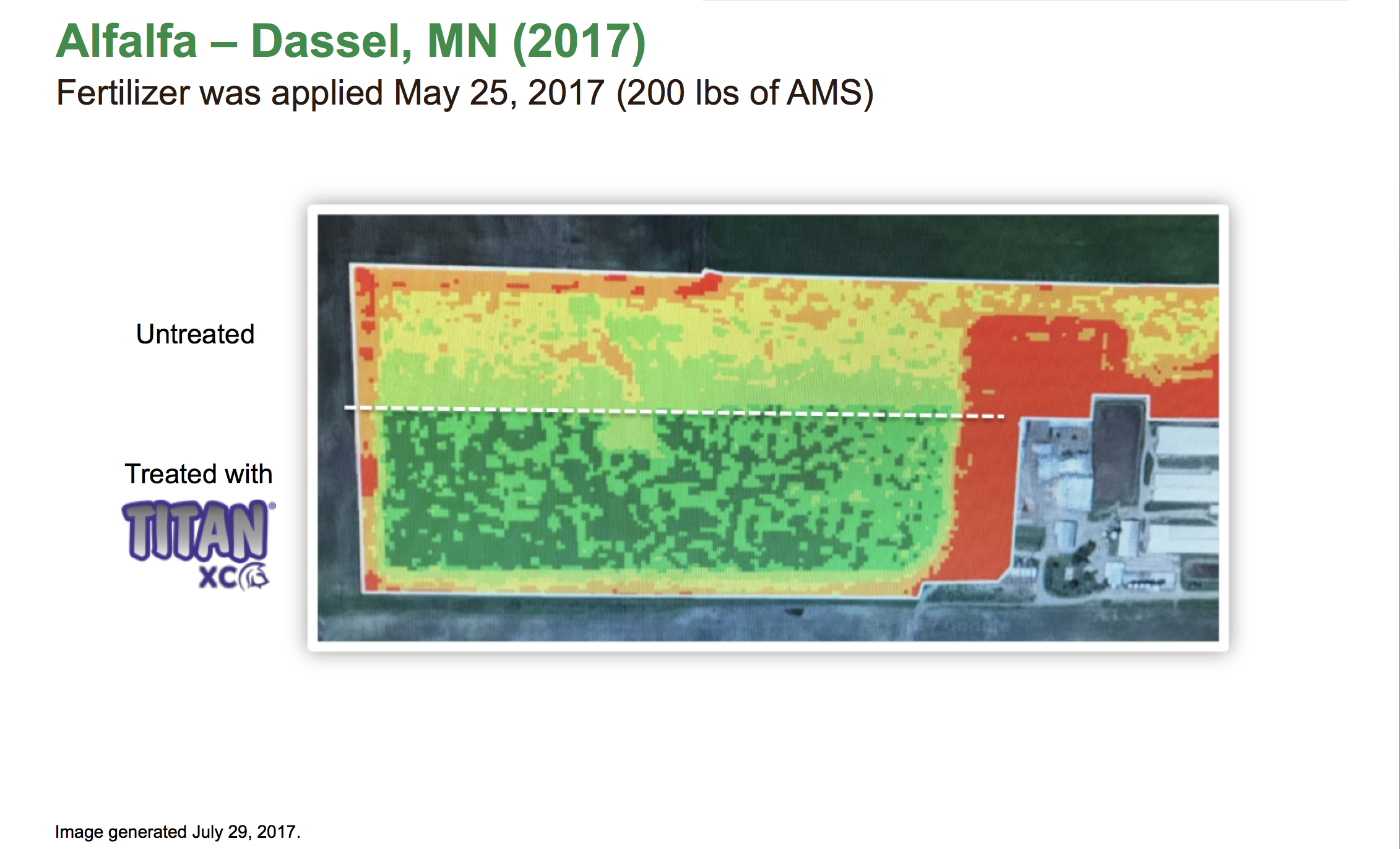
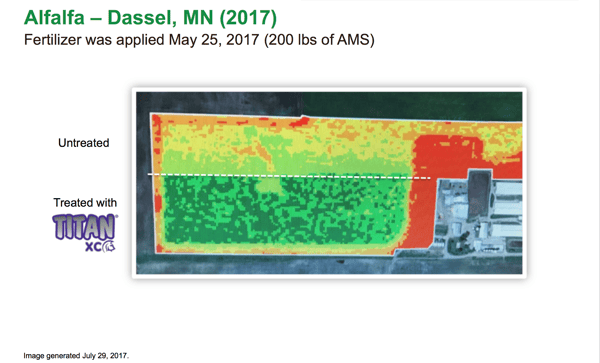
After viewing this alfalfa field image, the grower, who is a dairyman, went to visit his local Nutrien Ag Solutions branch in Dassell, Minnesota with an important question: "What's wrong with the top half of the field?"

Looking back in his records, branch manager Mike Amundson saw that the only difference between the different parts of the field was that fertilizer on the top half of the field had not been treated with a biocatalyst. The fertilizer on the bottom half, where the alfalfa crop was really thriving, had been treated with Titan XC.

Download the Titan XC Booklet
Alfalfa – Dassel MN

Both the treated and untreated fertilizer (200 lbs/acre of ammonium sulfate) had been spread on May 25, 2017. Titan XC was applied to the treated fertilizer prior to spreading. The Echelon image, seen above, was taken two months later, on July 29, 2017.

It turns out that Titan XC was the key to bringing out the best in this alfalfa field. 

Learn more about Titan XC by downloading the Titan XC booklet.

Download the Titan XC Booklet

Read More