


<img height="1" width="1" style="display:none" src="https://www.facebook.com/tr?id=301879849994395&amp;ev=PageView&amp;noscript=1">

Blog

See the latest news, innovation updates, trial results, grower stories and more from Agricen. 
July 9, 2026 — Posted By Agricen

Mid- to late summer is prime time for growers to be on the lookout for fungal diseases like gray leaf spot, tar spot and southern rust in corn and septoria brown spot, white mold and frogeye leaf spot in soybeans. While fungicides are a standard and effective practice when faced with the potential for these yield-robbing diseases, an application that combines a foliar fungicide plus TERRAMAR better optimizes plant health and can protect even more yield potential.

Terramar fungicide corn trial illinois

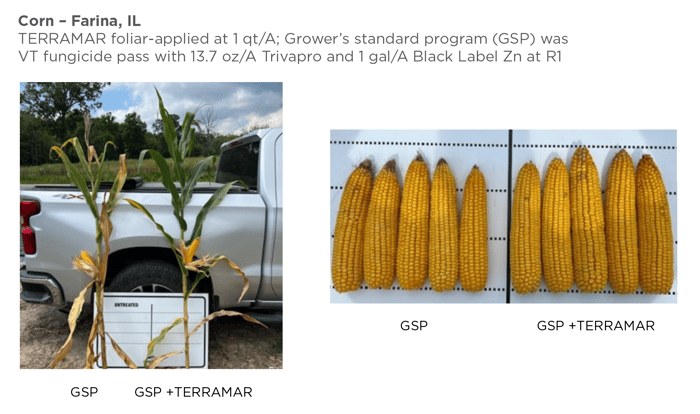
In this trial from Jefferson County, Illinois, adding TERRAMAR to the grower's standard fungicide program (GSP) at VT stage resulted in better late-season stay green and better kernel fill/test weight compared to the GSP alone.

How TERRAMAR Complements Corn and Soybean Fungicides

Fungal diseases destroy green leaf area and reduce photosynthesis, leading to less carbohydrate production and less sugar supply during grain fill /pod fill. They also cause the plant to drain or reallocate sugars to help the plant function under disease pressure, which can lead to poor kernel or pod fill and stalk cannibalization.

TERRAMAR complements the action of fungicides by enhancing photosynthesis, improving nutrient uptake and preserving valuable sucrose for grain and pod fill, while also mitigating the effects of heat-induced stress the crop may encounter.

Terramar fungicide corn trial Indiana

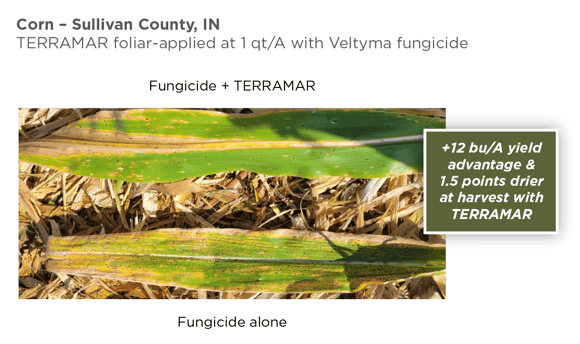
Utilizing TERRAMAR with a VT fungicide application not only improved plant health (as is visible in the larger, greener corn leaf at top), but also led to a significant yield advantage in this Indiana corn trial.

A reproductive-stage application of TERRAMAR:

  • Increases photosynthetic capacity/carbon fixation → more carbohydrate production
  • Enhances sucrose production, storage and utilization → more sugar supply during grain fill/pod fill; better kernel fill/pod fill
  • Increases nutrient uptake and metabolic activity → more optimal plant physiological functioning
  • Improves plant tolerance to heat and other abiotic stress → less stress stacking/reduces compounding effect of biotic + abiotic stress

TERRAMAR is compatible with most fungicides and crop inputs, with a standard foliar rate of 1 quart/acre. Application timing is flexible, but reproductive-stage application windows for TERRAMAR align well with fungicide timing:

  • VT–R1 (most common in corn)
  • R1 to R4 (soybeans)

Terramar soybean fungicide trial Indiana

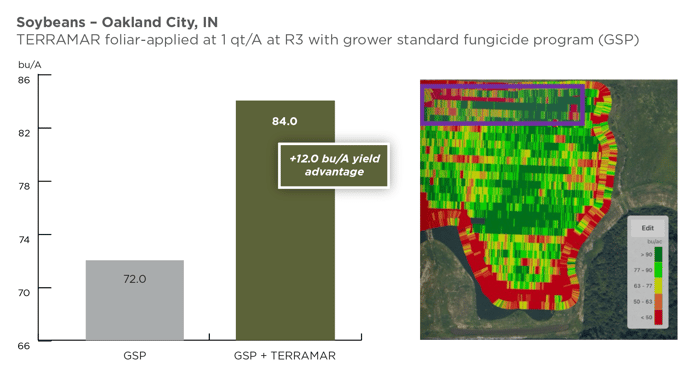
Soybeans also benefit when TERRAMAR is added to an R-stage fungicide application. In this trial from Indiana, there was a +12 bu/A yield advantage associated with adding TERRAMAR to an R3 foliar fungicide application.

Bottom line: Fungicides protect the crop, while TERRAMAR keeps the crop functioning better across a range of growing conditions. Together, they help the crop realize more of its yield potential.

Learn more by downloading the TERRAMAR + Foliar Fungicide FAQ.


Read More
July 2, 2026 — Posted By Agricen

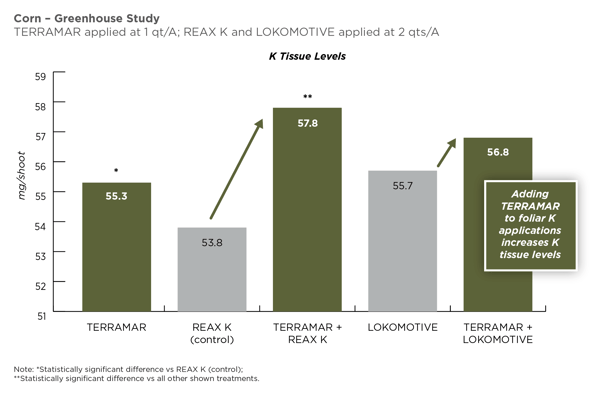
When TERRAMAR is applied to a crop, one well known benefit is greater plant uptake of nutrients, including potassium (K). This not only applies to uptake of K from the soil, but also to uptake of K that is foliar applied during the season. TERRAMAR serves as a booster, getting more K into the plant when applied with foliar K products.

The greenhouse study below shows how adding TERRAMAR to a foliar K product like LoKomotive or Reax K can impact K tissue levels in the plant. There was a synergistic effect when TERRAMAR was applied with each foliar K product, leading to greater uptake of this critical nutrient than with any foliar K product alone.

Corn-Terramar-ReaxK-Lokomotive-Potassium

TERRAMAR is also a good fit with foliar K applications as well as with other in-season foliar applications a grower may be making (including herbicides and fungicides) because it is known to increase a plant's photosynthetic capacity, enhance sucrose storage and utilization, improve the crop's overall physiological functioning and mitigate the effects of abiotic stress, all of which helps build a stronger plant and preserve yield potential throughout the season.

Summary of TERRAMAR's Key Benefits:

  • Improves nutrient uptake efficiency (including K uptake)

  • Builds photosynthetic capacity resulting in a larger, more robust plant with increased sucrose storage

  • Preserves plant sucrose reserves by improving physiological functioning, leading to more sucrose availability at grain fill

  • Mitigates the impact of abiotic stresses like heat or dry conditions

Bottom line: Addressing K levels in the plant, particularly in K-limited soils, is a challenge. Making an in-season foliar K application is a solid agronomic approach that can be enhanced with the addition of TERRAMAR. Given that K is often a yield-limiting factor, utilizing TERRAMAR with a foliar K product can set the crop up for higher yield.

Learn more about TERRAMAR by downloading the TERRAMAR with foliar K study.

Read More
June 11, 2026 — Posted By Agricen

Chad Henderson - blogAbout five years ago, Chad Henderson, a corn and soybean farmer from Madison, AL, was following a standard practice of strip-tilling his fields in the fall and applying 200 pounds per acre of P and K fertilizer. Looking to improve fertilizer efficiency, he began treating his dry fertilizer with the biocatalyst TITAN XC to enhance nutrient availability and uptake.

"I'm a data-driven farmer," Chad explains. "I applied my typical fertilizer amounts and replicated the treatment six times across two different hybrids, in both irrigated and non-irrigated fields. Where TITAN XC was applied with my dry fertilizer, the corn yields consistently averaged +15 bushels more per acre compared to where my untreated fertilizer was applied."

In addition to the immediate increase in phosphorus and potassium uptake—and the corresponding yield gains—Chad observed a significant improvement in his soil nutrient profile. Year-over-year on-farm data confirmed that soil nutrient levels began improving almost immediately. The use of TITAN XC accelerated the release of existing nutrition, while also increasing the availability of nutrients that would typically remain tied up in the soil. Increased fertilizer efficiency as a result of TITAN XC treatment allows growers to realize higher yields and lower production costs per bushel.

"I've reduced my P and K application down to 100 pounds per acre and still see the same results, which is hard for some people to believe," Chad says. "I'm getting more availability while using 50% less fertilizer by treating it with TITAN XC. It improves my soil and allows me to apply less fertilizer while still achieving maximum results. It's a no-brainer in any economic situation."

Dry fertilizer is considered a standard input for corn production, but only 20-30% of applied phosphate and 20-60% of applied potash is typically available to the corn crop in the first year of application. One thing that sets TITAN XC apart is the rapid improvement in the availability and uptake of applied nutrients when TITAN XC is used to treat dry P and K fertilizers.

"We learned that we don't have to wait for warmer soils and perfect conditions for microbial functioning to increase and nutrient mineralization to occur. The production process of TITAN XC does that for us," says Chad. "So we are starting immediately with nutrient mineralization, which increases everything that follows."

TITAN XC is part of a nutrient efficiency line of products from Agricen that is available through Loveland Products and Nutrien Ag Solutions.

"At first, I didn't know what to look for. The yield increase got my attention," says Chad. "But what I discovered next was even more important: TITAN XC helped produce a stronger, more robust crop overall."

Learn more about TITAN XC by downloading the TITAN Booklet.

(This story was also featured in a recent article in Agronomy Magazine.)

Read More
June 4, 2026 — Posted By Agricen

As yield increases, so does crop residue volume, particularly in corn. Excess post-harvest residue presents challenges on any farm, especially in reduced till or no-till environments. Come spring, three of the main issues farmers with excess residue can face are:

  • Lower soil temperatures: This is particularly problematic as soybean planting dates are pushed earlier.
  • Excess moisture: Residue retains moisture and can delay planting.
  • Delayed emergence: Residue on top of the row of planted soybeans can decrease seed to soil contact and delay emergence.

One way to tackle this challenge is with an application of EXTRACT, which can be broadcast on crop residue in the fall after harvest or in the spring prior to planting to enhance residue decomposition. The newest version, EXTRACT XC, is concentrated for easy handling in the field.

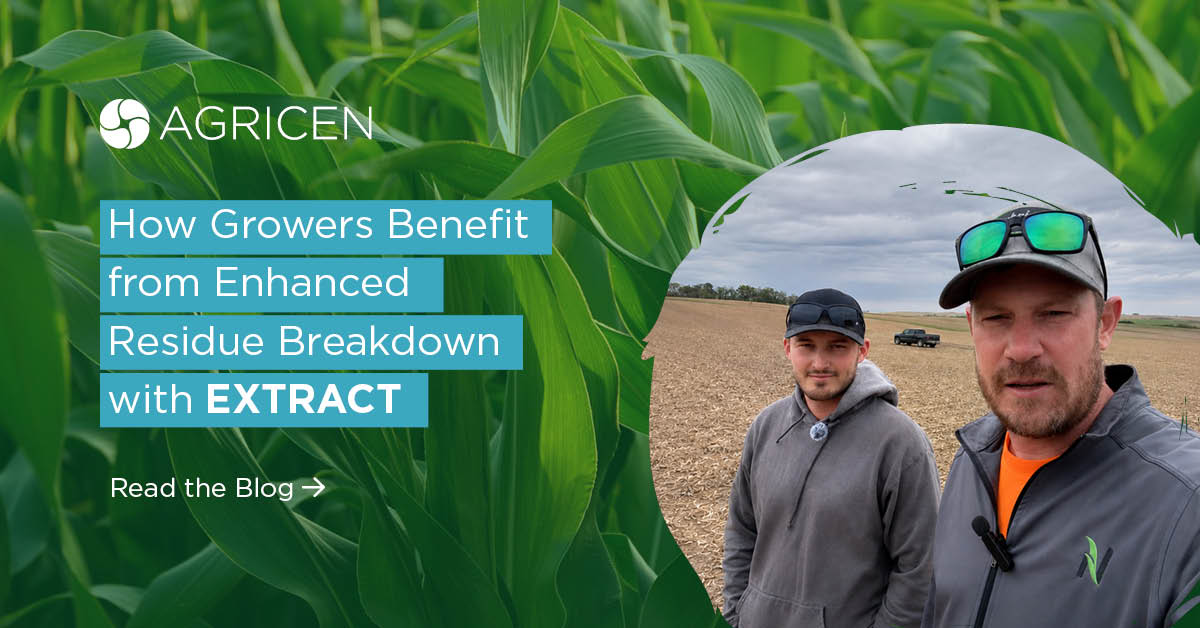
Extract Residue Decomp_Tanner_AndrewTanner Evenstad (pictured on left), who farms in Belmont, Wisconsin, worked with his Loveland Products agronomist Andrew Tucker (pictured right) in the fall of 2025 to apply EXTRACT on his corn stalks as part of a residue management trial. Taking a look at his field in late April, he could see a significant difference where EXTRACT was applied.
Where it wasn’t applied, that’s where the residue wasn’t broken down nearly as much, and it was a little bit harder to dig the seed,” Tanner explains. “You could tell that the areas treated with EXTRACT were better.”

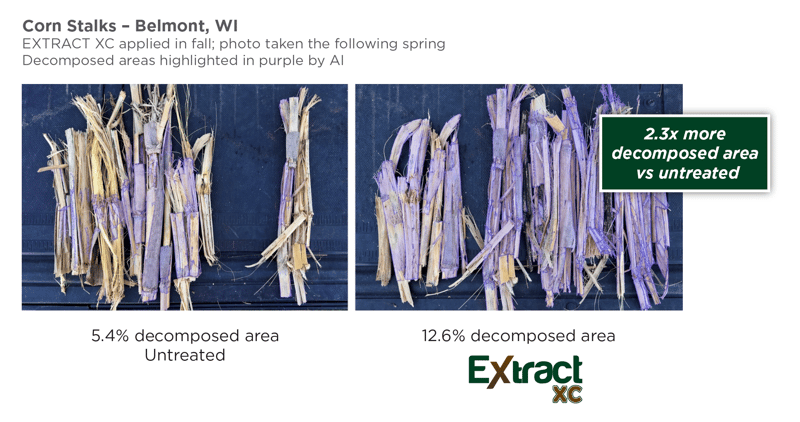
Andrew and Tanner also used AI to help them compare some of the corn stalks from the treated and untreated areas. Looking at their samples, they found that stalks pulled from the EXTRACT-treated field had 2.3x more area showing decomposition compared to untreated stalks.

06-26 Extract XC Corn-Residue Decomp-blog

For decomposition analysis, the image was converted to grayscale, then artificial intelligence (AI) was used to apply an automatic threshold to highlight decomposition-associated areas. AI detected and highlighted decomposition in 5.4% of the area in untreated stalks compared to 12.6% of the area in stalks treated with EXTRACT.

One of the advantages of EXTRACT is that the key component driving its residue breakdown capabilities is not live microbes, but rather the metabolites that microbes make naturally, which is captured during the manufacturing process. It is these metabolites that do the heavy lifting of helping to turn residue from last season into plant-available nutrients this season, while also increasing the rate of nutrient mineralization in the soil profile.

This means that farmers don’t have to wait for their soil microbes to “wake up” in the spring to start the process of residue breakdown and nutrient mineralization. Instead, EXTRACT gives them a head start, since the microbial metabolites in the product are active even under cool conditions.

This not only increases nutrient availability in the soil, it also offers the potential for earlier planting in the spring.

We’re able to get out to the field a little bit sooner with that residue decomposition from EXTRACT,” says Andrew. "We're really looking forward to doing tissue tests in season and seeing what extra nutrients we made available for the soybean crop this year."

Learn more by downloading the EXTRACT XC product booklet.

Read More
May 11, 2026 — Posted By Agricen

By Scott Lay, Senior Director of Commercial Development

The more efficient farmers are at utilizing nitrogen, the better outcomes they stand to achieve, both in terms of crop yield and farm economics. This is particularly true in a year with high nitrogen prices like we are seeing in 2026. By improving nitrogen use efficiency, N-FINITY can have a positive impact for growers seeking to more effectively manage their nitrogen investment across a broad range of crops. Let's look at some of the details.

Nitrogen, Naturally

N-FINITY is a novel technology that was introduced commercially last season. In combination with synthetic nitrogen, N-FINITY makes more biological nitrogen available to the crop and produces a bigger, more robust plant, providing another way of addressing nitrogen fertility beyond paying for additional synthetic nitrogen.

Rather than relying on only one mode of action, N-FINITY employs three different modes of action to access biological nitrogen sources in the soil:

  • Direct nitrogen fixation in the soil

  • Recruitment of native nitrogen-fixing microbes to associate with plant roots

  • Liberation of organic nitrogen in the soil, so that it is more available to the crop

Whether applied at planting (in furrow or 2x2) or used in season with liquid sidedress, Y drop or streamer bar applications, the recommended rate of N-FINITY is 1-2 quarts/acre.

What Have We Seen in the Field?

Prior to the 2025 introduction of N-FINITY, we had two years of data from 344 replicated and split-field trials testing N-FINITY in corn, soybeans and wheat. In those trials, we saw an average yield response of +7.9 bu/a and positive performance across a wide range of weather circumstances and growing environments.

With data from another year of use in the field, we’ve continued to see strong performance and consistent ROI. In 2025, 903 on-farm trials across 10 crops showed an 81% win rate and a 5.2% yield advantage with N-FINITY. Specific to corn, the average yield response with N-FINITY was +7.1 bu/a compared to check.

How Does N-FINITY Impact the Rate of Applied N?

One of N-FINITY’s advantages is that it has the flexibility of providing a benefit across different applied nitrogen systems, including those in which the grower may opt for a responsible nitrogen rate reduction. Corn trials conducted in 2024 and 2025 with N-FINITY in furrow offer a glimpse into the yield benefits that can be gained when N-FINITY is used with either a full-rate of applied nitrogen (+6.3 bu/a yield advantage N-FINITY) or at a 20% rate reduction of applied nitrogen (+3.9 bu/a yield advantage with N-FINITY).

05-26 N-FINITY corn

The table below provides direction related to the applied nitrogen rates that may be appropriate in different agronomic scenarios.

05-26 N-FINITY table

Summary

The ability to get the highest level of production possible from every unit of applied nitrogen benefits both the crop and the farmer. With N-FINITY, farmers can take better advantage of natural sources of nitrogen to feed their crops.

With three ways to supplement nitrogen, N-FINITY is more effective and consistent across a broader range of crops, soil types and growing environments compared to competitive products, while also having significant advantages related to ease of handling and compatibility with different chemistries, including liquid fertilizers, insecticides and fungicides.


Learn more about N-FINITY by downloading the N-FINITY booklet.


Read More
April 29, 2026 — Posted By Agricen

Chad Henderson Alabama Farmer N-FINITYChad Henderson, a fifth-generation farmer who grows corn and soybeans in Madison, Alabama, is always enthusiastic about testing new products and practices. In 2025, he tried N-FINITY, which supplements nitrogen applications by providing nitrogen from biological sources.

When we tried N-FINITY in our 2x2 program in corn, I didn’t really know what to expect, but we saw a yield increase," says Chad. “It had about a +7-bushel advantage compared to where we didn’t use it."

That first year, Chad applied N-FINITY with his standard rate of nitrogen, but nitrogen prices this season have him considering a change.

In our first trial, we didn't cut any nitrogen back because I was just getting to know the product. But we picked up yield from the N-FINITY, and I think I had more nitrogen in the field than I needed,” he explains. “Well, that was back when 32% UAN was $300 to $320/ton. Now, it's more like $590/ton, which makes a product like N-FINITY even more attractive. This year, we’ll do the same trial again, but we're going to cut the nitrogen back.

Depending on field conditions, soil type and other considerations, growers who use N-FINITY may be able to consider modestly reducing their synthetic nitrogen application by 10-20%, provided that nitrogen isn’t a yield-limiting factor.

We know for a fact that it takes a certain amount of nitrogen to raise a crop or to raise a bushel of corn. We can't just cut, cut, cut, because we’ve still got to raise the crop. So we’ve got to be strategic,” Chad notes.

In 2026, N-FINITY will be a part of that strategy for Chad. This year, he plans to reduce his applied nitrogen by 20 lbs/acre in the trial area, which will offset the cost of N-FINITY given the higher price of UAN. If the 7 bu/acre yield response from 2025 carries over to this year’s crop, the net gain would translate to $30-35/acre, assuming today’s December 2026 corn prices.

With nitrogen prices what they are, anything that helps with nitrogen availability and uptake is where we’re at, and that’s what we saw with N-FINITY,” Chad says. “If you're looking for better availability of nitrogen, then this would be a product you look at.

You can hear more from Chad on Agricen's YouTube channel, and you can learn more about N-FINITY by downloading the N-FINITY product booklet.

Read More
February 3, 2026 — Posted By Agricen

Extract XCWith spring planting approaching, Agricen’s Scott Lay spoke with Dennis Michelsen of WITY Radio about new EXTRACT XC, and how it can help farmers ensure that every dollar they spend on fertility inputs makes a bigger impact this season.

Dennis - WITY Radio: We've talked about the EXTRACT product line before, but EXTRACT XC is a slightly different version of a product that we know works well.

Scott - Agricen: EXTRACT is a nutrient mineralization technology that has been on the market since 2017. The new iteration, EXTRACT XC, is the same technology, but twice as concentrated for simpler handing, while still delivering the same yield benefit that farmers have come to expect.

Dennis - WITY Radio: EXTRACT XC can be applied at the same time as other broadcast applications, such as liquid fertilizers, water and pre-plant herbicides. So you're simplifying the process for producers.

Scott - Agricen: As we approach spring, we're targeting that pre-plant or pre-emerge herbicide broadcast application. What we're trying to do with EXTRACT XC is make more nutrients available by mineralizing and releasing more of the nutrients bound in the soil profile. Using a football analogy, if the opening kickoff represents the start of planting season, with EXTRACT XC we're beginning our offense 20 yards farther down the field, closer to the goal line, as a result of increasing the amount of phosphorus, potassium and other nutrients available to the crop.

Dennis - WITY Radio: You describe EXTRACT XC as a biocatalyst for nutrient mineralization and release. Explain why using this kind of product is so important in today's agricultural world.

Scott - Agricen: Farmers don't need to be reminded of the higher cost of fertilizer and diminished commodity prices we're experiencing right now compared to the last two years. Step one for success with any crop is applying the needed nutrients, and that’s certainly something we shouldn’t shortcut. Once those nutrients are applied, step two is figuring out how to get more of the nutrients in a plant-available form to benefit the crop.

That's really the essence of the biocatalyst technology in EXTRACT XC. We're enhancing the level of nutrient availability in the range of 15 to 20% more. That equates to real dollars that farmers will see on the yield monitor as the combine goes across the field in the fall.

Dennis - WITY Radio: We need to be smarter in how we feed the crop at these grain prices.

Scott - Agricen: The more we can make nutrients more available—whether to corn, soybeans, wheat or another crop—the better the consistency and physiological development of that crop, and the better the chance of preserving yield potential. That's what pays the bills.

Dennis - WITY Radio: Can you explain why using EXTRACT XC at different times throughout the growing season will play an important role heading into 2026?

Scott - Agricen: Again, we would like to start at the beginning of the season by using EXTRACT XC with a pre-plant or pre-emergent herbicide application. That's where we kick start the mineralization and release of nutrients.

But we also recognize that the crop’s demand for nutrients increases during the season. Peak nutrient demand in corn is from V10 through a couple weeks after pollination, and in soybeans it’s after bloom stage. So there's another opportunity in which we can apply EXTRACT XC and extend or enhance nutrient availability—for example, by applying it with a liquid sidedress application in corn—to increase crop yield and also get a better return on investment.

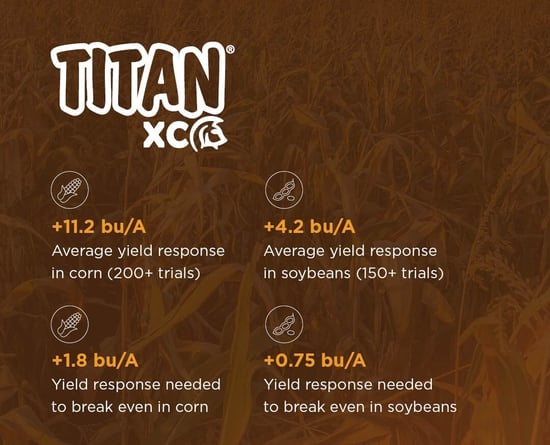
On average, we’ve seen a +10-bushel yield increase in corn and a +4.4-bushel increase in soybeans with the EXTRACT technology. That equates to a very consistent positive return on investment.

Dennis - WITY Radio: When you're faced with lower grain prices, a great yield is no longer a luxury. It's a necessity, and return on investment is what it's all about.

Scott - Agricen: The yield monitor doesn't lie. What any farm operation is trained to do is lower the cost of producing each bushel. So you can either spend less and run the risk of decreasing your productivity, or you can increase your yield with a modest investment in something like EXTRACT XC. And that's how greater efficiencies are gained over time.

EXTRACT XC is available from Nutrien Ag Solutions.

This interview was edited for length and clarity. You can listen to the interview below or on Agricen's YouTube channel.


Read More
October 6, 2025 — Posted By Agricen

09-25-Titan-webinar-landing-pgHow can growers make the most of every pound of dry fertilizer they apply, especially with higher than normal fertilizer costs? One way is to focus on improving the efficiency of dry fertilizers that are spread in the fall or spring.


Watch our on-demand webinar, "Powering Crop Performance with More Efficient Dry Fertilizer Applications," to learn:

  • How to make dry fertilizer applications more efficient to power crop performance and increase ROI

  • How treating dry fertilizer with TITAN XC can help crops meet their overall nutrient needs

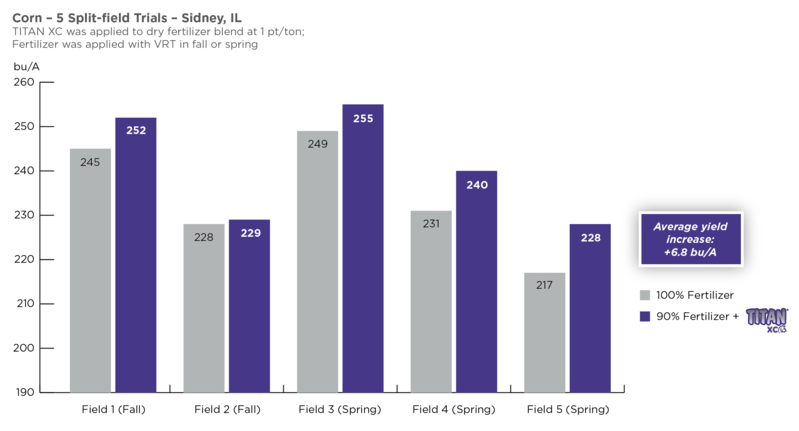
  • Details from recent trials comparing TITAN XC-treated vs untreated dry fertilizer

When dry fertilizer is applied to the field, many nutrients in the dry fertilizer prills are not immediately available to the plant or soil. They must first go through mineralization or other conversion processes to transform into plant-available forms of the nutrients. Examples include applied phosphorus (P205), which must be converted to HPO4 or H2PO4 before the crop can use it, and potash fertilizers like KCl or K2O, which must be converted to K+.

Treating dry fertilizer with TITAN XC, which is specifically formulated to increase nutrient availability and uptake from dry fertilizer blends, expedites this process. As part of the investment in next year’s crop, it helps deliver maximum yield and return on investment by making every TITAN XC-treated prill go farther and work harder, including in corn, soybean and cotton crops.

Watch the webinar today to learn how to get the most out of your fall dry fertilizer application. 

Read More
September 29, 2025 — Posted By Agricen

Titan 100 M AcresWith harvest approaching, many growers are also getting their fall fertilizer plans in place. In this short interview, Agricen’s Scott Lay speaks with WITY Radio about TITAN XC and how it can enhance fall dry fertilizer applications.

Dennis - WITY Radio: Tell us about TITAN XC and when it gets applied.

Scott - Agricen: Fall fertilizer is really the first input decision being made for next year’s crop. It's important to get that crop off to a fast start. TITAN XC is applied to dry phosphate and potassium fertilizers. The intent of applying TITAN XC to the dry fertilizer is really to do two things. The first is to increase the availability of applied nutrients in the spring when that crop can make use of it. The second is to provide a consistent return on investment. Given the fact that fertilizers are higher priced than what we’d like while commodity prices are lower, it's really important to provide that positive return on investment.

Dennis - WITY Radio: When the markets are down, the only way you're going to get over that break-even point is by growing more bushels, and that's what TITAN XC helps you do.

Scott - Agricen: It does. TITAN XC has been on the market since 2012, and we actually just passed a milestone in the spring application season, in which the 100 millionth acre of TITAN XC-treated fertilizer was applied. One hundred million acres doesn't happen by accident, and it doesn't happen unless the product provides a consistent return. What we've seen over time and over millions of acres is about a +9.5-bushel response on corn on average and a +4.5-bushel per acre increase in soybeans. That’s very positive math.

Dennis - WITY Radio: Explain how TITAN XC works to free up those nutrients.

Scott - Agricen: TITAN XC is a biological-based material that is powered by metabolites. While many biological products struggle in the presence of salt-based fertilizers or different environments, TITAN XC can be applied directly to dry fertilizer. In simple terms, when we apply dry fertilizer—which is really just little rocks or pebbles—Mother Nature will help mineralize those nutrients in that fertilizer. All TITAN XC does is accelerate that process by about 15 to 20%. So if more of those nutrients that are applied this fall are in a plant available form next spring, that translates to increased emergence, better early season vigor and gives that plant a better chance for yield, which is what folks are writing the check for.

Dennis - WITY Radio: I understand that TITAN XC also helps free up some of those soil bank nutrients, so it's like you're getting more bang for the bucks you’ve already spent.

Scott - Agricen: In any given growing environment, there are hundreds of dollars’ worth of phosphorus and potassium tied up in the soil. The biochemistry component in TITAN XC helps to naturally release and mineralize those nutrients that may otherwise be bound. Having access to more P and K gives that plant a better chance to photosynthesize and build a better base, so that when you get to this time of year, it converts to greater yields. And it's not just in one year, one zip code or one crop, but across a wide range of geographies and growing environments.

Dennis - WITY Radio: You obviously get a great response if you work with your regular fertilizer strategy. But would it also allow you to lower that fertilizer rate a little bit?

Scott - Agricen: This fall, as growers are looking at their bottom line or their input expenditures for next year, we don't need to find new and creative ways to spend more. If a grower is looking to offset the cost of TITAN XC, meaning no increase in net expenditure, a reduction of only 10 to 12 lbs per acre of P and K can offset that cost. We've seen over a number of different trials and field uses that this can lead to positive yield outcomes and a positive return on investment.

TITAN XC is available from Nutrien Ag Solutions, with more information available at the Loveland Products site.

This interview was edited for length and clarity. You can listen to the interview below or on Agricen's YouTube channel.


Read More
September 17, 2025 — Posted By Agricen

Corn and soybean fungicide applications are crucial tools that help growers minimize loss from yield-robbing diseases like tar spot and southern rust. In the same pass, growers can also enhance nutrient uptake and plant tolerance to abiotic stresses, such as heat, by adding TERRAMAR to the tank mix.

In a recent corn trial conducted in Sullivan County, Indiana, a grower split an 80-acre field, treating half the field with his normal fungicide (Veltyma) at the VT growth stage and the other half with the same fungicide treatment plus 1 quart per acre of TERRAMAR.

At harvest, there was a clear difference between the two halves of the field. On the TERRAMAR-treated half, the plants looked overall healthier compared to the plants on the untreated half. The grower also reported that they stood better and didn't lean as much after the fields experienced some strong winds. At harvest, the half treated with TERRAMAR had a +12 bu/acre yield advantage and was 1.5 points drier compared to the untreated half.

Terramar-fungicide-corn-IN

Casey Holder, Location Manager of Nutrien Ag Solutions in Shelburn, Indiana, served as a crop consultant on the trial. "To think, he gained that much yield and profit on top of the corn being drier which saved him money at the bins...it was a huge success," he says. "Now we treat almost every acre of corn and beans with TERRAMAR. Most of my customers apply a quart during their post herbicide pass as well as another quart at fungicide timing."

Similar results have been seen in soybeans when TERRAMAR is applied with a fungicide, such as in this trial from Oakland City, Indiana, showing a yield improvement of +12 bu/acre when TERRAMAR was added to the grower's standard soybean fungicide application. 

Terramar-fungicide-soybeans-IN

There are several reasons why TERRAMAR complements a fungicide application so well. First, TERRAMAR has been shown to increase photosynthesis and nutrient uptake. It also increases sucrose production, which typically leads to a yield increase. In addition, TERRAMAR increases transpiration and decreases the crop canopy temperature, helping the crop to better tolerate stresses caused by heat and dry conditions, which can be common in summer when fungicide applications go out. 

Learn more by downloading the TERRAMAR corn and soybean study.

Read More