


<img height="1" width="1" style="display:none" src="https://www.facebook.com/tr?id=301879849994395&amp;ev=PageView&amp;noscript=1">

Blog

See the latest news, innovation updates, trial results, grower stories and more from Agricen. 
May 20, 2024 — Posted By Agricen

By Jeremiah Butler, Agricen

Early in the summer of 2023, widespread nutrient deficiencies were observed in the Corn Belt, particularly potassium (K) deficiency in corn. Due in large part to drier-than-average early season growing conditions, abiotic stress—or stress from environmental conditions—was more prevalent, impacting crop physiological development and reducing nutrient uptake during a critical phase.

Beginning in mid-June, a number of crop consultants were reporting an interesting phenomenon. Corn fields treated with a foliar application of TERRAMAR in the V3-V7 growth stage visually appeared to be healthier and were not exhibiting the same level of K deficiency symptoms as untreated corn.

As a result of these observations, a trials was conducted on later-planted corn in Minnesota to evaluate the impact of a V4 application of TERRAMAR on nutrient uptake and abiotic stress reduction.

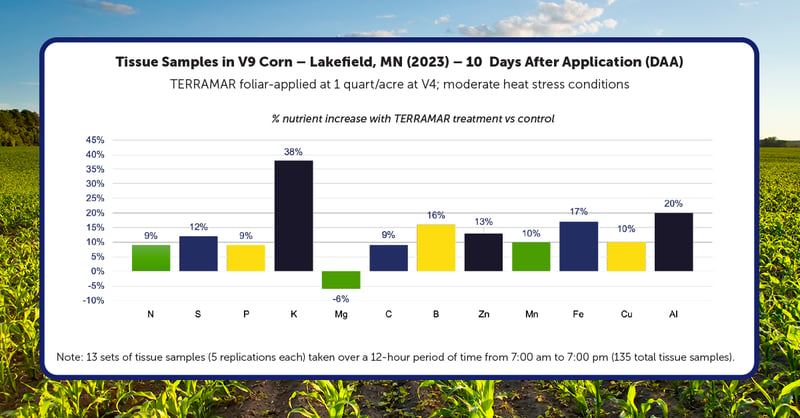
In the Minnesota trial, a foliar application of TERRAMAR (1 quart/acre at V4) was followed by rigorous tissue sampling to determine nutrient uptake levels of treated versus untreated plants. A total of 135 tissue samples were taken at the V9 growth stage (10 days after application) hourly over a 12-hour period (7 am to 7 pm). In addition, leaf surface temperature readings of treated and untreated plants were taken to evaluate canopy temperatures. Higher ambient air temperatures during the trial period were an indication that the corn crop was experiencing moderate heat stress.

Compared to the untreated corn, TERRAMAR increased uptake of the majority of nutrients into the corn leaf tissue (Fig. 1). Potassium uptake was particularly notable, showing a 38% increase compared to the untreated corn.Terramar-tissue-samples-1200px

Fig. 1. Percent increase in micro- and macronutrients in corn tissue with TERRAMAR treatment versus untreated. Samples taken 10 days after foliar application of TERRAMAR.

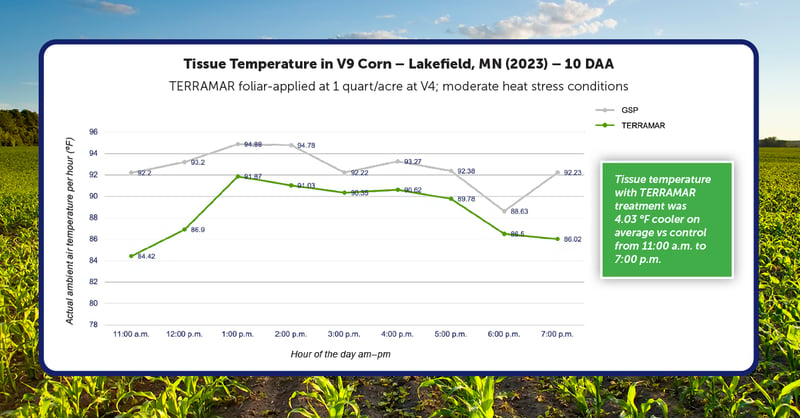
Leaf canopy temperature was also notably reduced in corn that had been sprayed with TERRAMAR compared to the untreated corn (Fig. 2). Lower leaf temperatures indicate that the plants were under less stress and were therefore able to more efficiently perform physiologic functions such as transpiration and photosynthesis.

Terramar-tissue-temp-1200pxFig. 2. Tissue temperature in the leaf canopy of corn plants treated with TERRAMAR versus untreated. Temperatures taken using thermal camera 10 days after foliar application of TERRAMAR.

At harvest, the TERRAMAR treatment was associated with a yield advantage of +11.2 bushels/acre compared to the untreated corn (165.8 bu/a vs 154.6 bu/a, respectively).

These results are in line with prior research demonstrating TERRAMAR’s consistency in reducing stress from abiotic factors (e.g., heat, drought, salinity, wind, hail and wet environments) at any given time in the growing season following a foliar application.

While stress mitigation significantly contributes to the product’s performance, more recent research indicates that a foliar application of TERRAMAR also increases nutrient uptake (documented by leaf tissue tests in both stressed and non-stressed environments), nitrate assimilation, carbon fixation, and photosynthetic capacity. These benefits add value by providing more efficient nutrient uptake during the crop’s critical demand windows.

Every growing season creates a different set of challenges, but some things remain constant. Globally, 50% to 70% of crop yield is lost to abiotic stress factors. Taking measures to reduce the impact of abiotic stress and increase nutrient uptake throughout the growing season with new technologies like TERRAMAR provides growers a fighting chance to add more to their bottom line across a range of crops.

Learn more about TERRAMAR by accessing the Minnesota corn trial bulletin

Access the Study

Read More
May 13, 2024 — Posted By Agricen

Wity-radio-down on farmAs growers finish putting this year’s crop in the ground, Agricen’s Scott Lay spoke with WITY Radio’s Dennis Michelsen about TERRAMAR, a foliar product designed to help crops increase nutrient uptake and better tolerate weather-induced stress.

Dennis - WITY Radio: It’s impossible to predict the weather long term, but we know that something will always put our crop under stress every growing season. Would it be fair to say that the main reason a producer would want to add TERRAMAR to their lineup is to reduce stress?

Scott - Agricen: That is the essence of it. Weather-induced stress is one of the greatest yield robbers that farmers face. Up until this point, short of going to church on Sunday and praying for more moderate temperatures and rain, there's not been a heck of a lot we could do to address stress.

TERRAMAR was new to the row crop market last year, during which nearly 2M acres were treated. It does two things. One, it has a biologically extracted kelp component that minimizes the effects of weather-related stress, such as heat, drought or early season cold. Secondly, it has a biologically extracted carbon component that stimulates the plant to pull in more nutrients to aid in chlorophyll production and photosynthetic capacity, as well as increase carbon fixation in the plant. In this way, TERRAMAR provides a one-two punch that equals a better chance for yield at harvest time.

Dennis - WITY Radio: How and when is this product applied?

Scott - Agricen: TERRAMAR is designed for post-emergent foliar application throughout the growing season. It can go out early in the vegetative stages with a post-emergent herbicide in advance of the stresses that will present themselves to the crop. Then, as we get into the reproductive stages where a fungicide is often applied for the purpose of minimizing the impact of disease, a dose of TERRAMAR at that time will carry on for at least two to four weeks to minimize the impact of weather-induced stress.

We can measure this by canopy temperature. Last year, we did a number of trials across Indiana, Michigan and Minnesota to quantify the impact of TERRAMAR on canopy temperature in both corn and soybeans. Throughout the course of a July day, we saw that the canopy temperature of plants treated with TERRAMAR was 3°F to 5°F lower compared to untreated.

If you can lower the canopy temperature, that plant will be more efficient in reproducing and filling.

Dennis - WITY Radio: That's the key, Scott, because we always think about drought as a big stressor of crops, but we also get those hot nights where the temperature doesn't drop much below 75°F. That plant needs all the help it can get to stay out of stress, or we're losing bushels.

Scott - Agricen: That is absolutely correct. Heat happens in every zip code and every crop, every year. If we can moderate the temperature of the canopy, we're minimizing the impact of heat. It's not a replacement for a 60° F night. But if we can minimize the impact of those warm July and August evenings and give that plant a better chance to photosynthesize and to transpire water and nutrients, again that correlates very nicely to better yield potential.

Dennis - WITY Radio: What's the ROI that we can expect?

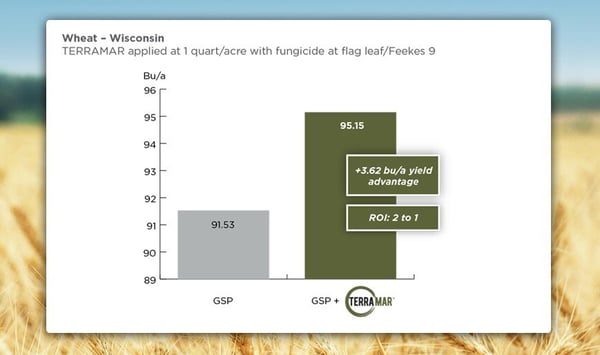
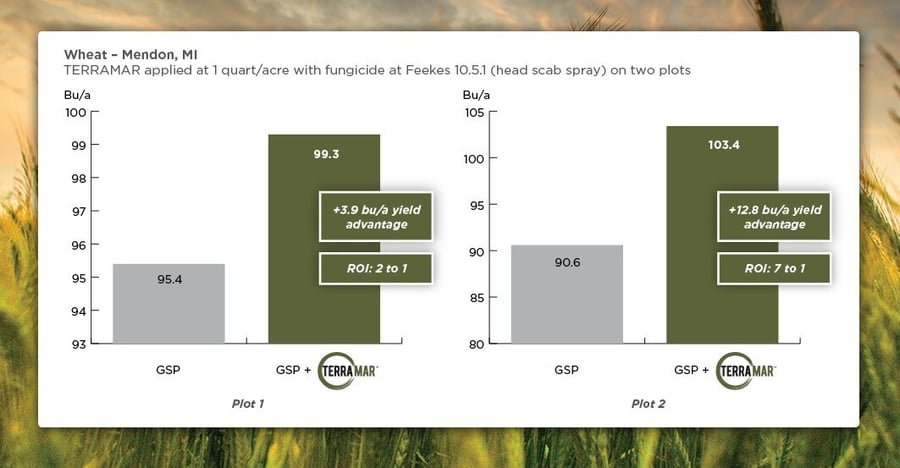
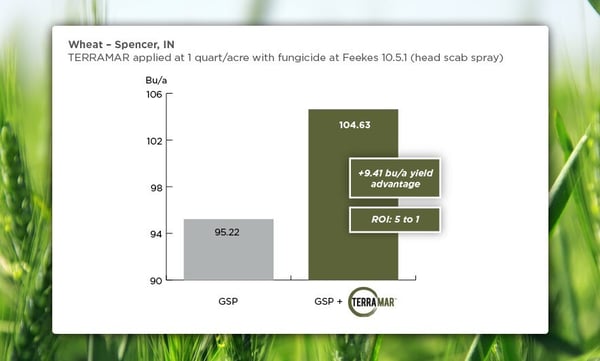
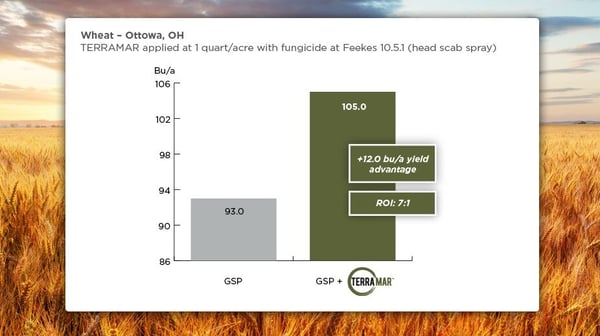
Scott - Agricen: In third-party university trials and farmer-conducted side by sides, we’ve found that the average response is 7 to 10 bushels in corn, 4 to 7 bushels in soybeans and 5 to 8 bushels in wheat. All told, regardless of crop, the average is a 3 or 4:1 return on investment. So for every dollar invested in TERRAMAR, a farmer could expect a $3 to $4 return as a result of an increased yield result.

TERRAMAR is available from Nutrien Ag Solutions.

This interview was edited for length and clarity. You can listen to the interview below or on Agricen's YouTube channel.


Read More
April 24, 2024 — Posted By Agricen

CropLife-webinar-archive

Whether conditions are “ideal” or stressful, the key is to be prepared for whatever the growing season brings so that you can reach your yield goals.

In this on-demand webinar hosted by CropLife, "Stand Up to Stress for Higher Yield & ROI," you'll learn:

  • What abiotic stress is

  • How ag biologicals and biostimulants fit into crop stress and plant health management programs

  • How TERRAMAR, a new foliar technology for agricultural crops, enhances plant performance while mitigating the impacts of abiotic stress

During the webinar, Dr. Connor Sible of the University of Illinois discusses common abiotic stresses, how biological and biostimulant technologies can play a role in addressing them, and, specifically, how marine extracts promote stress relief in plants. He also discusses the need for a proactive approach when it comes to application timing.

"Stress mitigating biostimulant applications need to be proactive, not reactive," says Dr. Sible. "The crop needs time to build the defense so that it is able to tolerate the stress when it arrives."

Agricen's Dr. Brian Cornelious follows his presentation with a discussion of TERRAMAR, which can be used to enhance nutrient uptake while improving crop tolerance to abiotic stress.

TERRAMAR is a unique combination of carbon- and marine-based components that have complimentary functions:

  • Carbon-Based Technology (derived from biologically converted leonardite) enhances nutrient uptake and provides key carbon derivatives for additional energy to optimize plant performance

  • Marine-Based Technology (derived from biologically digested kelp) improves crop tolerance to abiotic stressors such as heat, drought, salt, and cold

Exclusively available from Loveland Products through Nutrien Ag Solutions, TERRAMAR can be used in combination with early, mid-season, or late-season foliar applications (including foliar nutrition, insecticides, herbicides, and fungicides) to mitigate stress and improve nutrient uptake. Foliar applications deliver its unique set of highly active, metabolite-based compounds for quick absorption through the leaf tissue of the plant. Multiple field trials validate the effectiveness of TERRAMAR as an addition to crop protection and nutritional programs.

Watch the webinar to learn how to help your crops stand up to stress for higher yield and ROI.

Watch the Webinar


Read More
April 15, 2024 — Posted By Agricen

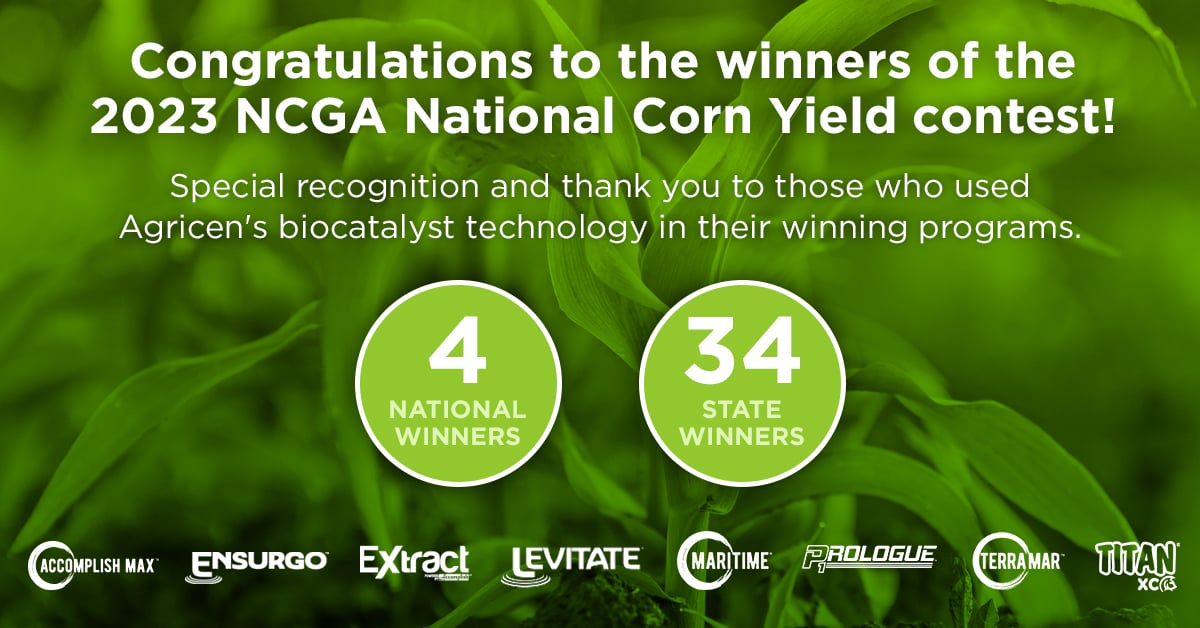
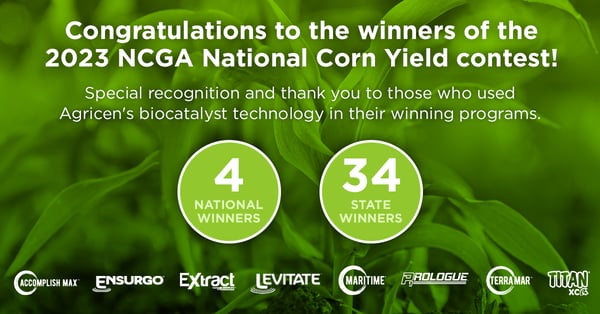
More than three dozen farmers in the 2023 National Corn Growers Association (NCGA) Corn Yield Contest used Agricen's biocatalyst technologies in their winning programs. They include four farmers who took top places at the national level and 34 who took top places in their states. 🏆

NCGA_social-2023

The winning growers used one or more of the following products in their corn fertility programs: Accomplish MAX, Ensurgo, Extract PBA, Levitate, Maritime, Prologue, Terramar and Titan XC. All of these products are exclusively available from our partner, Loveland Products, through Nutrien Ag Solutions.

Corn Yield Winners

The 2023 national corn yield winners again included Virginia farmer Heath Cutrell, who earned first place in the "Conventional Non-Irrigated" category (396.12 bu/a yield). You can learn more about Heath in our short video, Striving for Record Corn Yields.

Other national winners who used Agricen's technology were:

  • Maryland farmer Temple Rhodes, winner of the "Conventional Irrigated" category (375.67 bu/a yield)

  • Ohio's Corey Farrens, winner of the "Conventional Non-Irrigated - Corn Belt States" category (340.46 bu/a yield)

  • New Jersey's Scott Truszkowski, who earned second place nationally in the "Strip, Min, Mulch, Ridge-Till Non-Irrigated" category (323.75 bu/a yield)

We are proud to be a part of these growers' winning programs and wish them the best of luck as we begin the 2024 growing season.

Learn more about some of the technologies used in the winning programs by downloading the Sustainable Technology Overview.

Download the Overview

Read More
March 5, 2024 — Posted By Agricen

TERRAMAR can be applied to a wide variety of row crops, including corn, soybeans, wheat, grain sorghum (milo) and cotton. In this blog, we answer common questions about using TERRMAR in row crop programs.

What is TERRAMAR?
TERRAMAR is a breakthrough product that combines a biologically converted kelp source and biologically converted leonardite, which is a carbon source. It is intended for foliar applications in row crops at vegetative and reproductive stages. TERRAMAR supplements a balanced crop nutrition system by helping to maximize plant performance and yield across any type of growing conditions.

Why use TERRAMAR in row crops?
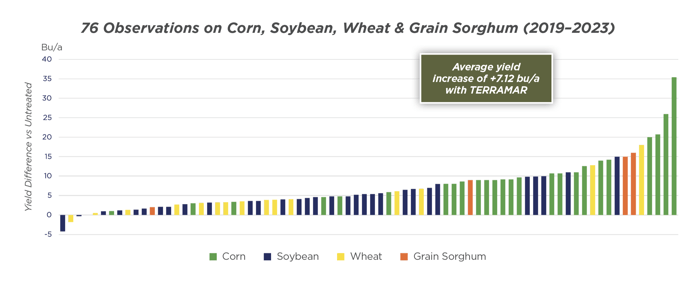
TERRAMAR is formulated to increase nutrient uptake and enhance stress mitigation, which can optimize plant health and contribute to enhanced yield. In 76 trials conducted from 2019 to 2023 across corn, soybeans, wheat and grain sorghum, TERRAMAR offered an average yield advantage of +7.12 bu/acre compared to untreated check.

Terramar-piano_graph 2019-2023


What are the key benefits of TERRAMAR for row crops?
TERRAMAR sets a new standard in stress mitigation and plant performance. Foliar application of TERRAMAR improves abiotic stress tolerance (e.g. heat, cold, drought) at various stages of plant growth. Visible improvements in stressed crops can often be observed several days after application. Additionally, increased nutrient use efficiency has been documented when TERRAMAR is applied in conjunction with a foliar nutrition program.

How is TERRAMAR applied?
TERRAMAR is recommended for liquid foliar applications in row crops to enhance plant performance while minimizing weather-induced stress. Foliar applications deliver TERRAMAR's unique set of highly active, metabolite-based compounds for quicker absorption through the plant leaf tissue. The recommended rate for TERRAMAR is 1 quart per acre. It is compatible with a broad range of liquid fertilizers, insecticides, herbicides and fungicides for maximum application flexibility.

When should TERRAMAR be applied?
TERRAMAR can be applied in early post-emergent applications as well as mid- to late-season fungicide applications.

Should I apply TERRAMAR even if I am not anticipating severe crop stress?
Yes. TERRAMAR can optimize plant performance in all growing conditions, whether they are stressful conditions in which crop development could be impacted or average to ideal conditions in which crops have the best chance of reaching their yield potential.

Learn more by downloading the TERRAMAR Frequently Asked Questions bulletin.

Download the Bulletin


Read More
July 10, 2023 — Posted By Agricen

Lee Lubbers Terramar TrialLee Lubbers, an XtremeAg grower in Gregory, South Dakota, tried TERRAMAR for the first time in 2022, testing it across fields with different yield environments.

"We were very intrigued by TERRAMAR being a stress mitigation product," says Lee. "We ended up applying about 4,000 acres worth of TERRAMAR on corn."

His first trial was in a field that was traditionally in the bottom one-third when it comes to yield.

"It ended up showing that the TERRAMAR is 7% better than the untreated," he says. "In our yield environment this year, to get a piece of ground to do this, and then to see a 7% increase...If we take that times 120 bushel, that's going to be about $60 an acre to our pocket. I'll take that all day long."

Lee speaks about that experience below.

A trial in a different field also showed him how well TERRAMAR can help growers hold on to yield under tough conditions.

"I was driving by a corn field where we applied TERRAMAR on our side of the road. On the other side of the section line, the neighbor did not," he says. "When we planted we were looking at each other, the neighbor and I, and when we sprayed we were looking at each other. But we...went with stress mitigation with TERRAMAR."

The day Lee checked in on that trial, the wind was blowing 25 to 30 miles per hour, the temperature was 105 degrees Fahrenheit and there had been little precipitation since planting.

"On our side of the section line, the leaves were green and erect. The plant was still functioning," says Lee. "I walked 40 feet across, and the neighbor’s field looked like a field of green onions. The corn leaves were just rolled up tight."

That fall, Lee cut 150- to 160-bushel corn, while the neighboring field got chopped for silage. Based on the strips left for the adjuster, Lee estimates that his neighbor had 40-bushel corn.

"We had to do fertility and our management practices to get to that point, but I know, in that third quarter going into the fourth, TERRAMAR helped us preserve that yield," he says. "Where the neighbor lost, we held what we had."

You can hear about it in Lee's own words below.

Learn more about TERRAMAR by downloading the TERRAMAR booklet.

Access the Booklet


Read More
July 5, 2023 — Posted By Agricen

Terramar Top 10Many agricultural areas across the United States are facing weather-related challenges, but there are still opportunities to make the most out of what Mother Nature is dishing out.
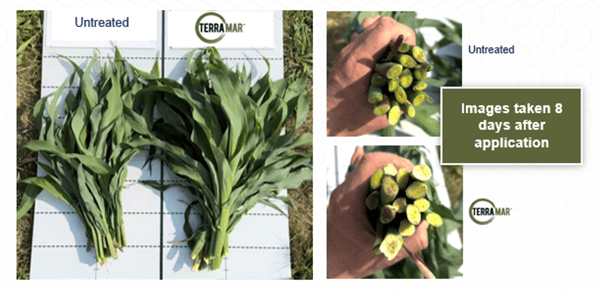
Terramar, a new product for row crops, is formulated to help crops stand up to abiotic stresses (such as heat and dry conditions) while also increasing nutrient uptake for better plant growth.

The photos below document the performance of Terramar applications made on corn, soybeans and wheat earlier this season, and they show some very strong visual results.

With another opportunity to apply Terramar now here (this time with fungicide or plant nutrition products on reproductive-stage corn and soybeans), we wanted to share these images as a reminder of the potential in this year's crop.

Here are the top 10 Terramar field pictures of 2023, so far:

1. Terramar on Corn – Ferris, Illinois

Terramar 1 Corn Ferris IL 2023 -1Dry conditions (No rain for 11-12 days). Terramar was applied at 1 pint/acre. Photos taken May 26, 2023, 8 days after application. 15 plants per bundle.

2. Terramar on Corn Muscoda, Wisconsin

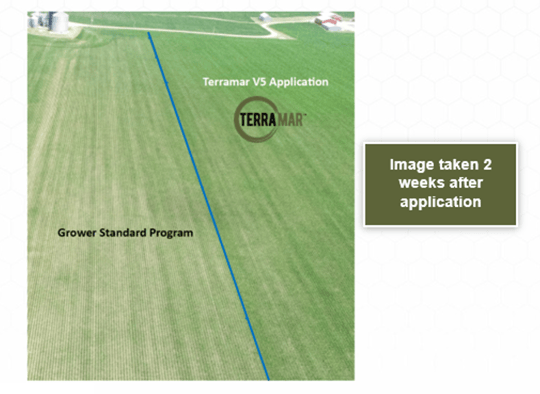
Terramar 2 Muscoda WI Corn 2023 -1Corn crop planted April 29, 2023. Dry conditions (2.2” precipitation since planting). Terramar was applied at 1 quart/acre at V5. Photo taken June 21, 2023, two weeks after Terramar application.

3. Terramar on Soybeans – Farmington, Illinois

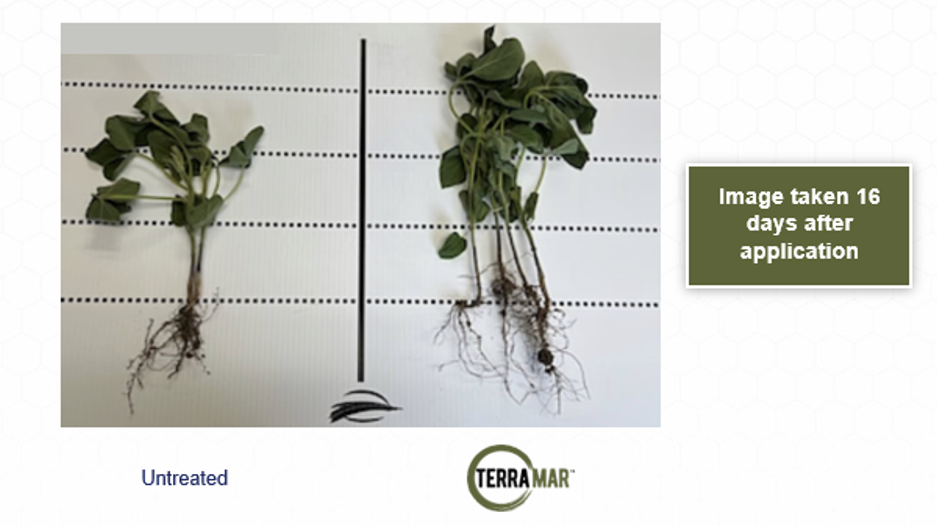
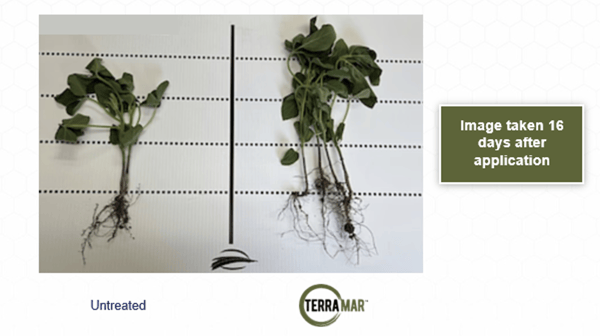
Terramar 3 Farmington IL Soybeans 2023Terramar was applied at 1 pint/acre on May 29, 2023. Photo taken 16 days after Terramar application. 

4. Terramar on Soybeans – East Chain, Minnesota

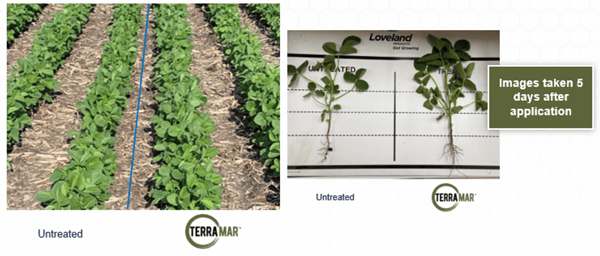
Terramar 4 East Chain MN Soybeans 2023Terramar was applied at 1 quart/acre. Photos taken 5 days after Terramar application. 

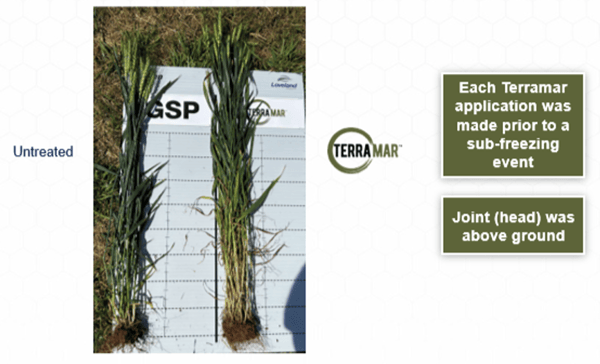
5. Terramar on Wheat – Kentucky

Terramar 5 Kentucky Wheat 2023

Terramar was applied twice, each time at 1 pint/acre prior to a sub-freezing event. Joint (head) was above ground. Photos taken mid-May.

6. Terramar on Wheat – Oberlin, Kansas

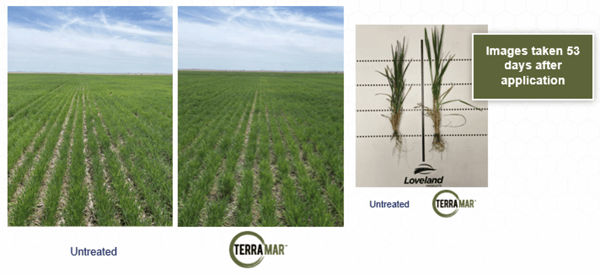
Terramar 6 Kansas Wheat 2023Terramar was applied at 1 quart/acre on March 24, 2023. Very dry conditions. Photos taken May 4, 2023, 53 days after Terramar application. 

7. Terramar on Corn – Fairview, Illinois

Terramar 7 Illinois Corn 2023-1

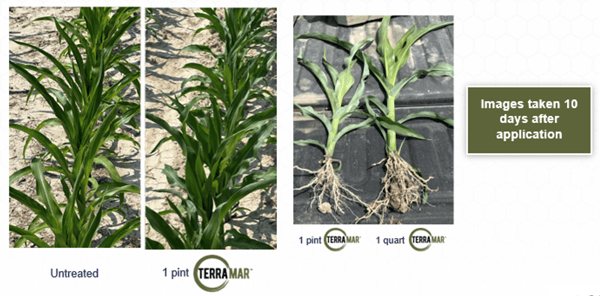
Terramar applied at 1 pint/acre at V4 (left) & at 1pint vs 1 quart (right).

8. Terramar on Corn – Bennet, NebraskaTerramar 8 Nebraska Corn 2023

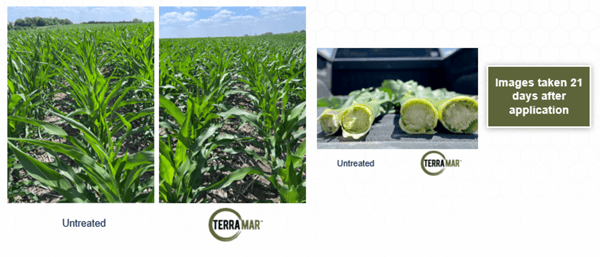
Terramar was applied at 1 pint/acre on May 30, 2023. Photo taken June 20, 2023, 21 days after Terramar application. Some leaf rolling observed on untreated corn. 86 degrees Fahrenheit.

9. Terramar on Corn – Ferris, Illinois

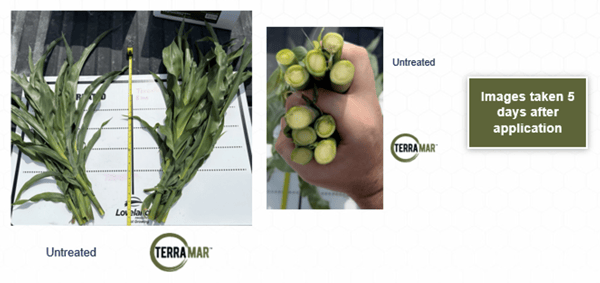
Terramar 9 Illinois Corn 2023Terramar was applied at 1 quart/acre on on June 3, 2023. Photos taken 5 days after Terramar application. Plants taken 20 rows into each block; 1 plant every 20 steps. 5 plants per bundle.

10. Terramar on Corn – Parker, South Dakota

Terramar 10 South Dakota Corn 2023

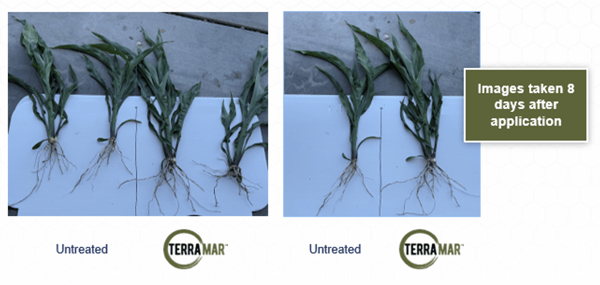
Terramar was applied at 1 quart/acre at V4 on June 7, 2023. Photos taken 8 days after Terramar application. 

*Bonus Photo* Terramar on Corn – Arcadia, Indiana

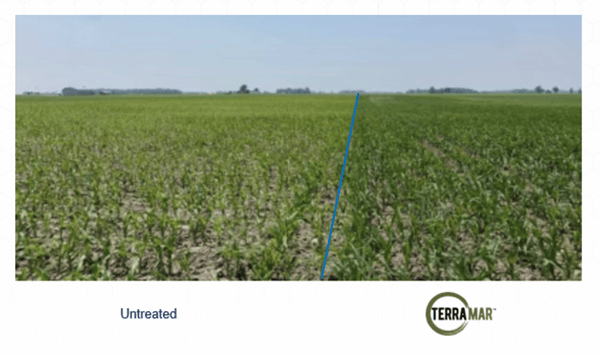
Terramar 11 Arcadia Indiana Corn 2023Terramar was applied at 1 quart/acre at V4-5.

*Bonus Photo* Terramar on Wheat – Western Kansas

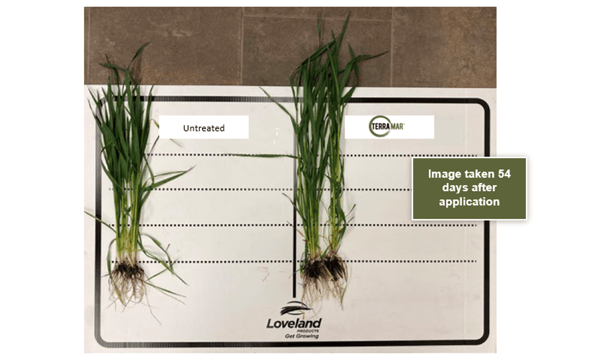
Terramar 12 Western Kansas Wheat 2023Terramar was applied at 1 quart/acre at first green-up (Feekes 3-4) on March 21, 2023. Cold and dry conditions. Photo taken 54 days after application.

Learn more about Terramar by downloading the Terramar row crop bulletin.

Access the Bulletin

Read More
June 29, 2023 — Posted By Agricen

Growers know all too well that hot and dry conditions can contribute to yield loss in corn and soybean crops, especially when these stresses last for a prolonged period of time. TERRAMAR gives growers the opportunity to mitigate the effects of these weather-related stresses so that their crops can hold on to their yield potential.

There are two key opportunities for making a TERRAMAR application on corn and soybeans. The first opportunity to apply TERRAMAR is with the early post herbicide pass, typically at the V4-V5 growth stage in both crops. The second opportunity is with a fungicide or foliar plant nutrition pass on corn and soybeans. For those who have already applied TERRAMAR earlier in the season, a two-pass program (first at the early vegetative growth stage, then at the reproductive stages) may be beneficial, particularly if crops are under prolonged stress.

In corn and soybeans, the window for applying TERRAMAR with fungicide or plant nutrition products is:

  • Corn - V10 (early season) through R3 (tar spot)
  • Soybeans - Pre-bloom through R3

All TERRAMAR applications made at reproductive stages should be at a minimum rate of 1 quart/acre. Applications can be made by airplane, helicopter or a ground rig.

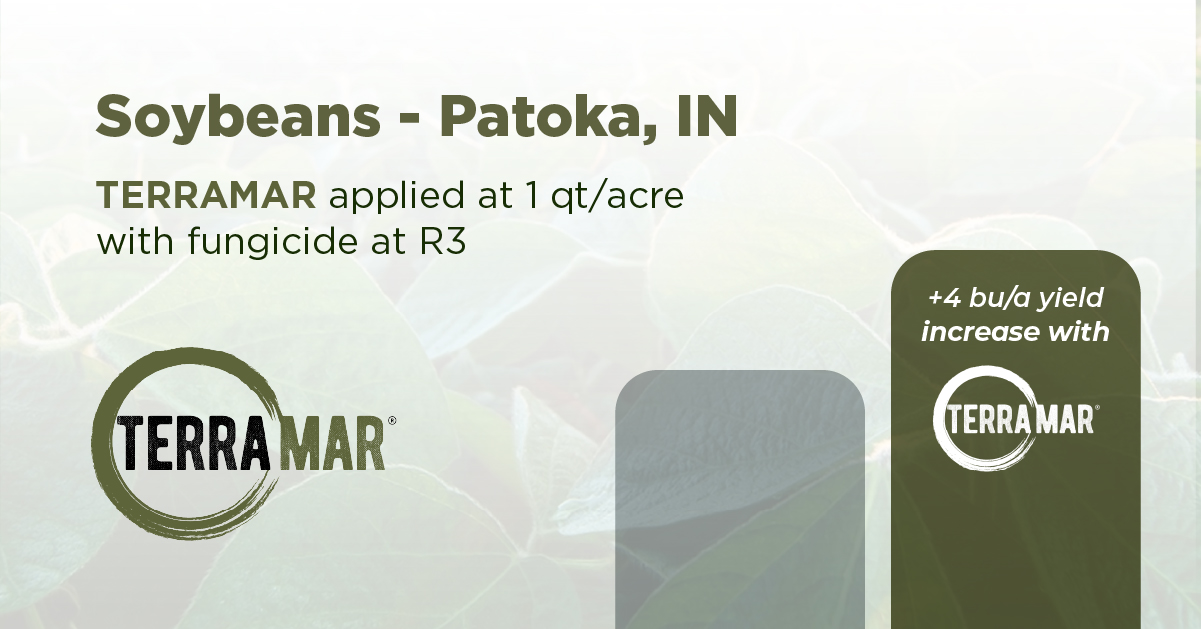
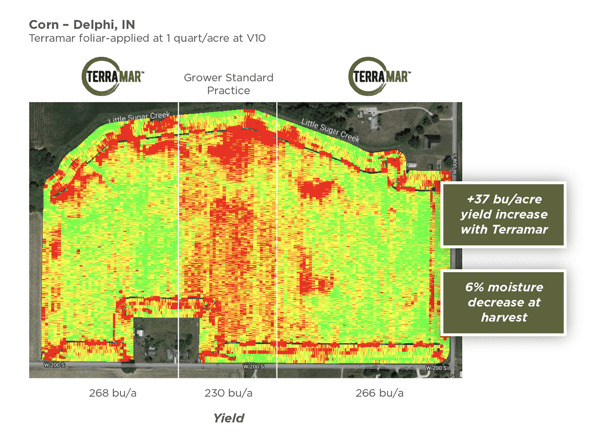
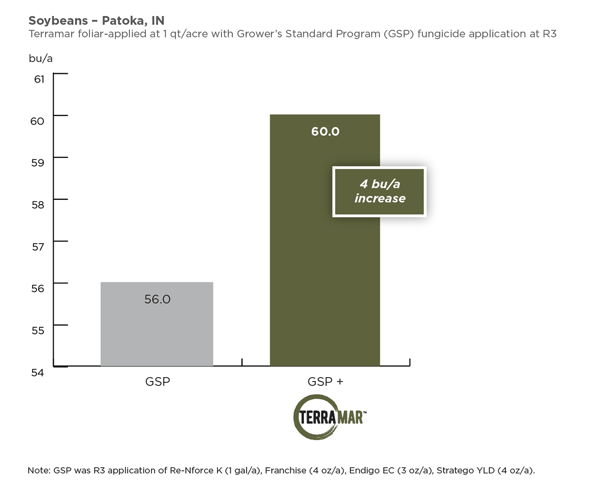
Below are two examples of recent trials in which TERRAMAR was applied at reproductive stages in corn and soybeans, leading to yield increases compared to the grower's standard practice.

Terramar-cornTerramar-soybeans

Impact of Heat and Drought Stress During Corn and Soybean Reproductive Stages

Typical fungicide applications occur as much of the Corn Belt, East and South begins to experience the most extreme time of heat and drought stress.

These conditions can have a significant, negative impact on the ability of corn and soybean crops to reach their full yield potential. About two weeks before silk emergence, corn enters the period of grain yield determination that is most sensitive to heat and drought stress. At this stage, wilting of the plant due to stress can decrease yield by 3-4% per day. During the silking and pollen shed period, severe stress may reduce yield up to 8% per day and, in the two weeks following silking, severe stress may reduce yield up to 6% per day.

In soybeans, stress during reproductive stages (R1 to R3) can lead to as many as 60-75% of flowers and up to 50% of the formed pods vulnerable to being aborted.

How TERRAMAR Helps to Address Heat and Drought Stress

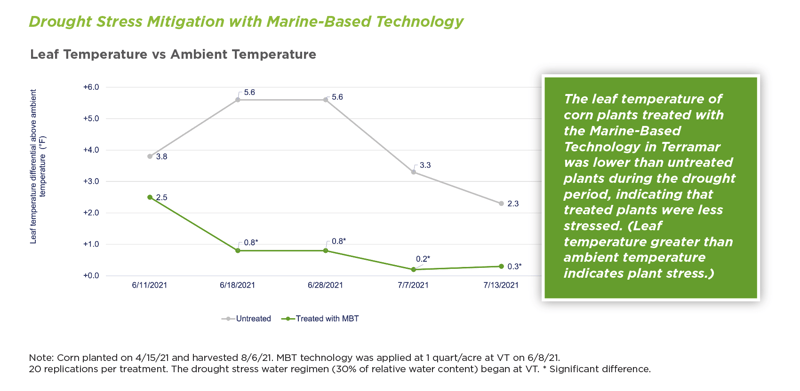
TERRAMAR has a unique ability to minimize stress by lowering the canopy temperature and increasing photosynthetic capacity during this critical window.

As seen in the chart below, the technology in TERRAMAR lowered the canopy temperature of highly stressed corn for a window of more than 30 days. A lower canopy temperature means less stress for the plant.

Leaf temperature MBT

As we approach the reproductive stages of both corn and soybeans, the potential for yield loss increases daily. This is where TERRAMAR can play a significant role in helping them “Stand Up to Stress” for a better-performing plant and a better overall outcome.

Learn more about Terramar by downloading the Terramar Row Crop Bulletin.

Access the Bulletin

Read More
June 12, 2023 — Posted By Agricen

With growers turning their attention to early post-emergent herbicide and other foliar applications in corn and soybeans, Agricen's Scott Lay spoke with Dennis Michelsen of WITY Radio to discuss Terramar, a new option for mitigating the effects of weather-related stress and helping crops realize their yield potential.

Dennis - WITY RadioTell us a little bit about Terramar.

Scott - Agricen Terramar is not only a new product, but also a new practice that can now be employed in farmers’ growing systems: the practice of minimizing weather-related stresses. Weather plays a tremendous role in determining yield, and weather stress may present itself through the months of May, June and July in the form of heat, drought or other challenges. Terramar helps to minimize the stress impact that crops experience and allows them to realize more of their potential.

Dennis - WITY Radio: I understand it's derived in part from kelp.

Scott - Agricen It is. Our colleagues in California who grow fruit and vegetable crops have been using kelp for some time. They recognize that plant extracts from kelp help crops with stress. It doesn't take the place of moisture or precipitation, but it does allow that plant to continue more of its normal physiological growth processes and minimize the impact of heat and drought.

There's also a carbon component to Terramar. Even in the absence of stress, that carbon provides needed energy for the plant, which is then translated into a plant that can pull more water and nutrients into the cells as it needs them. We saw some tremendous positive yield results last year when Terramar was applied in corn and beans.

Dennis - WITY RadioThere's a lot of different kinds of stress that Terramar can help fight.

Scott - Agricen If we apply this technology early in the crop's growth process, we're preparing that crop for whatever may come. While we can't predict whether there will be any heat or drought impact on that crop, we do know that if we can improve specific metrics in the plant with Terramar, for instance, increased chlorophyll production or increased water transpiration, that will result in a better performing plant, regardless of weather circumstances.

Dennis - WITY Radio Terramar is applied with a foliar application and I understand it mixes well with other crop inputs growers are already going to be using. How late into the season can we apply Terramar?

Scott - Agricen It can be applied even as late as reproductive stages in concert with fungicide applications. In corn, that’s shortly after pollination or tassel time. In soybeans, those fungicide applications may take place well into the reproductive stages into late July or early August.

Dennis - WITY RadioI like to think of a product like Terramar as sort of like an insurance policy. Could we benefit by using it twice, one run with the herbicides and then maybe later with the fungicide application?

Scott - Agricen Last year we saw evidence of that, where multiple applications turned out to provide a greater return in terms of increased yield. You could think of it as a practice that allows the plant to perform more closely to its potential. And in the absence of stress, pulling more nutrients into that plant—which the carbon based component provides—is a very critical yield enhancing practice.

Dennis - WITY Radio What sorts of results have you seen when you look at the return on investment?

Scott - Agricen Last year, the average response in corn was 7 to 8 bushels. In times of severe heat and drought stress like we had in the Western Corn belt, those yield responses were even greater, oftentimes in the 12- to 15-bushel range. In soybeans last year, the average yield response was right at about 4 to 5 bushels. Under today's commodity price environment, that’s a very handsome return.

Terramar is available from Nutrien Ag Solutions.

This interview was edited for length and clarity. You can listen to the interview below or on Agricen's YouTube channel.

Learn more about Terramar by downloading the Terramar product booklet.

Access the Booklet


Read More
May 24, 2023 — Posted By Agricen

Terramar Webinar

How can growers mitigate the effects of weather-related crop stresses like heat and dry conditions while also increasing nutrient uptake by their crops during the growing season?

Watch our on-demand webinar, "Introducing Terramar: A New Way to Help Row Crops Stand Up to Stress," to hear:

  • How Terramar improves crop tolerance to abiotic stresses while enhancing nutrient uptake

  • Why Terramar is a good fit for any row crop program, including corn, soybean, and wheat

  • Details about application timing, trial results, and more

Intended for foliar use in row crops, Terramar delivers increased nutrient uptake and enhanced stress mitigation to optimize plant health and contribute to enhanced yield.

Terramar combines two unique technology platforms with complimentary functions to improve plant performance and help crops "Stand Up to Stress":

  • Carbon-Based Technology, or CBT. CBT is derived from biologically converted leonardite, a carbon source. CBT enhances nutrient uptake and provides key carbon derivatives for additional energy to optimize plant performance

  • Marine-Based Technology, or MBT. MBT is derived from biologically converted kelp. MBT improves crop tolerance to abiotic stressors such as heat, drought, salt, and cold, which can represent significant yield-limiting factors.

Terramar is compatible with key crop inputs, including foliar nutrition, insecticides, herbicides, and fungicides, for maximum application flexibility. Multiple field trials validate the effectiveness of Terramar as an addition to crop protection (herbicide, insecticide or fungicide) and nutritional programs.

Terramar can be used in combination with early, mid-season, or late-season foliar applications to mitigate stress and improve nutrient uptake. Foliar applications deliver its unique set of highly active, metabolite-based compounds for quick absorption through the leaf tissue of the plant.

Terramar is exclusively available from Nutrien Ag Solutions.

Watch the webinar today to learn how Terramar can help row crops stand up to stress.

Watch the Webinar


Read More